

Using AI to trade options more selectively by focusing on catalysts, volatility windows, and historical outcomes.
Trading Options with AI
January 15, 2026


Table of Contents
Options trading rewards timing more than prediction. You can be right on direction and still lose money if you enter too early, choose the wrong expiration, or buy premium when nothing meaningful is about to happen. That’s why many options traders struggle—not because they don’t understand calls and puts, but because they lack context.
AI helps by narrowing the window where options actually make sense. Instead of reacting to charts or headlines after the move, AI focuses on conditions that historically lead to volatility, continuation, or sharp reversals. For options traders, that shift from guessing to filtering is where the real edge starts.
Options decay with time, which means speed and selectivity matter more than long-term forecasting. AI excels at monitoring thousands of stocks simultaneously and flagging moments when probabilities temporarily tilt in the trader’s favor. That’s something manual analysis simply can’t scale.
Rather than asking “What stock should I trade?”, AI reframes the problem to “Is this an environment where options historically worked?” That distinction reduces overtrading, lowers premium waste, and helps traders stay disciplined instead of reactive.
Most losing options trades share one flaw: no real catalyst. AI improves this by identifying market-moving events—such as earnings surprises, buybacks, dividend changes, CEO departures, or major contracts, layoffs, activist investor stake and more that historically lead to price movement within short timeframes.
LevelFields AI is built specifically around this approach. It alerts traders when these events occur and shows how similar events impacted the stock in the past. Instead of buying options based on hope or chart patterns alone, traders can act when history supports the setup.
Covered calls are simple, but poor timing can limit upside or increase regret. Selling calls right before volatility expands often means giving up gains unnecessarily. AI helps by identifying quieter periods when option premiums behave more predictably.
By using AI to filter out upcoming earnings, activist activity, or contract announcements, traders can sell calls when risk is lower and probability is clearer. The strategy doesn’t change—only the timing improves, which is where most covered-call mistakes happen.
Protective puts are insurance, but buying insurance constantly is expensive. AI helps traders hedge selectively by identifying periods when downside risk is statistically elevated rather than emotionally feared.
Instead of hedging blindly, traders can use AI to flag earnings events, regulatory risk, leadership uncertainty, or macro-sensitive exposure. This allows for targeted protection without draining returns during normal market conditions.
Some of the best options trades aren’t directional. They’re volatility-driven. AI excels at identifying situations where volatility historically expands, regardless of whether the stock moves up or down.
Events like earnings, FDA decisions, or merger speculation often trigger this behavior. AI-driven event data helps traders decide when volatility plays are justified instead of guessing based on implied volatility alone.
Selling spreads works best when large moves are unlikely. AI improves this by filtering out stocks with event risk or unstable historical reactions, helping traders avoid selling premium in dangerous environments.
Instead of relying solely on technical indicators, traders can use AI to confirm whether similar conditions led to calm price behavior in the past. This improves probability without increasing complexity.
Advanced options traders care less about direction and more about structure. AI allows traders to analyze which strikes, expirations, and setups historically performed best after specific event types.
LevelFields AI supports this by tying historical returns and win rates directly to real-world catalysts. This shifts decision-making from intuition to probability, helping traders choose smarter contracts instead of simply cheaper ones.
The LevelFields Portfolio app is built for investors who want structure without manual upkeep. Instead of juggling spreadsheets, formulas, and notes, everything lives in one centralized dashboard. Your stock ideas, active positions, closed trades, and original thesis stay connected, while prices, profit and loss, and upcoming earnings update in real time after a simple CSV import.
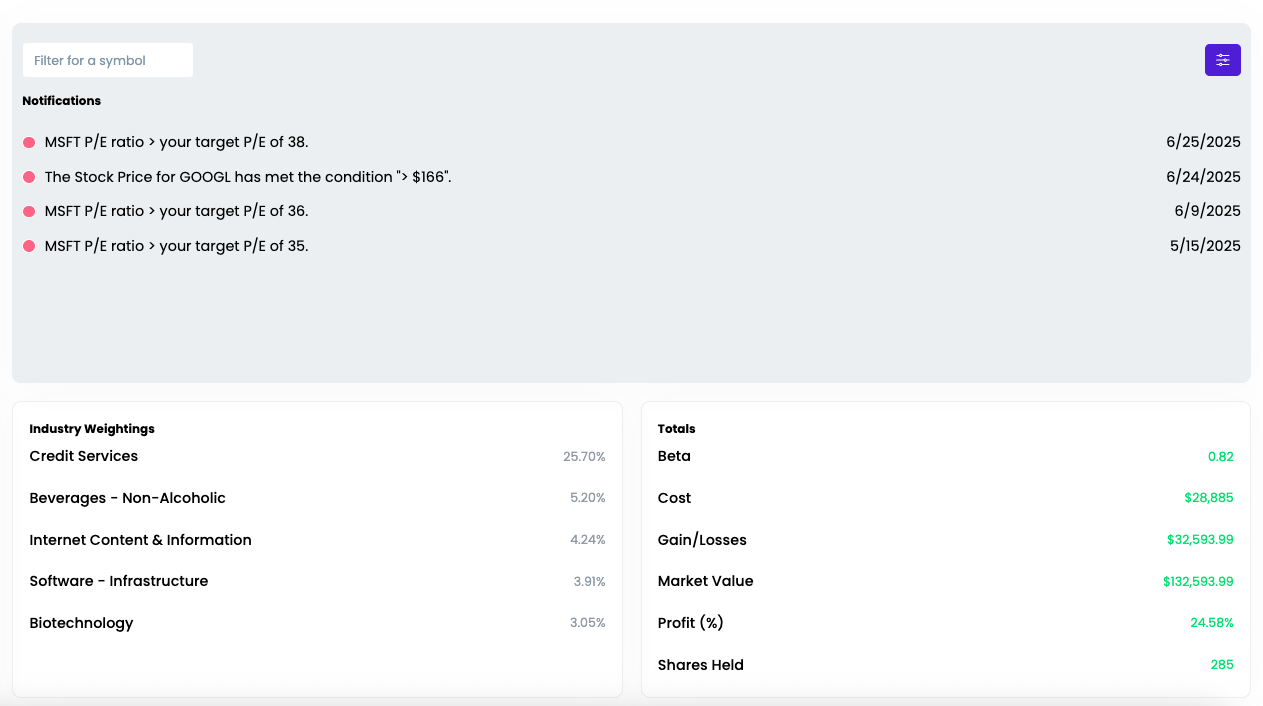
What sets it apart is alerts and review. You can set global price or valuation alerts across your entire portfolio instead of managing notifications one ticker at a time. Moving an idea into a live trade takes one click, and closed trades remain available for review so you can spot patterns in your decision-making. Excel builds discipline through structure; LevelFields keeps that discipline while removing the friction.
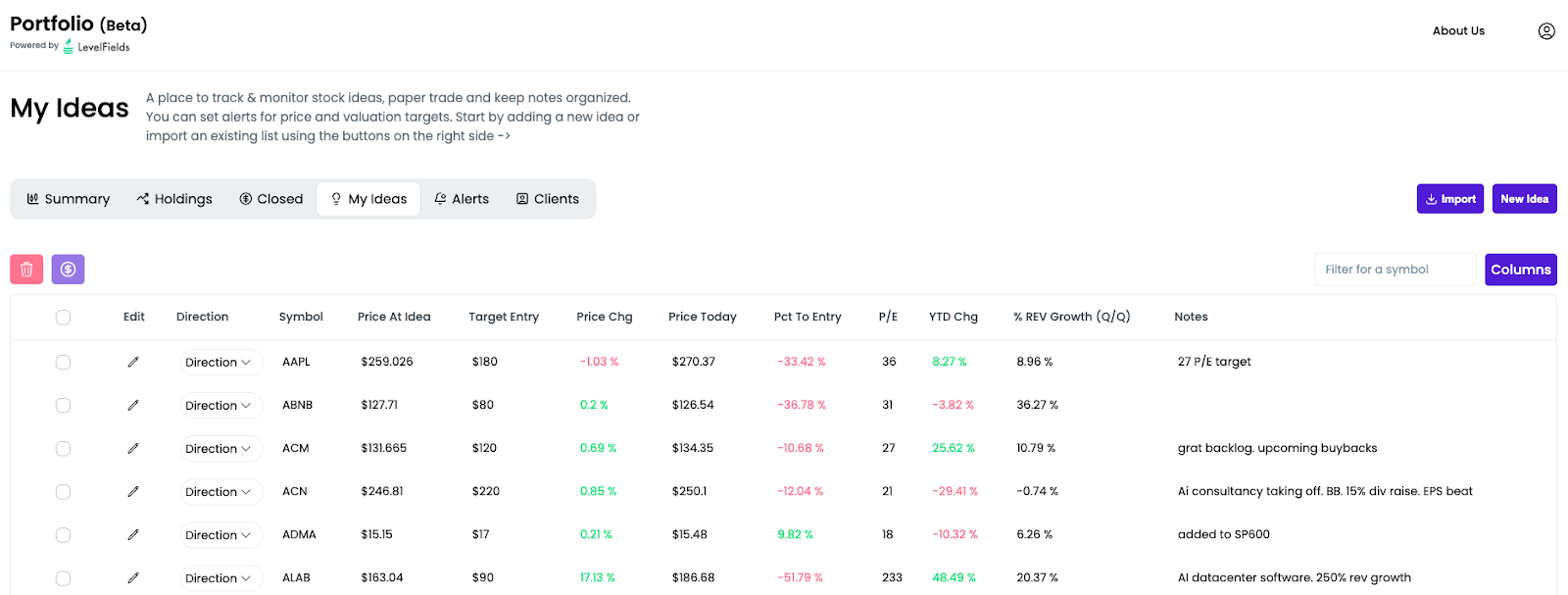
One of the biggest pain points with spreadsheets is alerts — or the lack of them. LevelFields solves this by letting you set global alerts across your portfolio instead of managing notifications one ticker at a time.
You can define price targets or valuation levels once, and get notified whenever any stock in your portfolio hits those conditions. That means fewer settings to manage and fewer missed opportunities. Entries and exits become easier to time because the system is watching for you.
LevelFields makes it easy to move a ticker from an idea into a live position with a single click, while keeping your original thesis and notes intact. As the trade plays out, you can track profits in real time and see upcoming earnings reports right alongside your portfolio data.
When a trade is closed, the platform doesn’t just move on — it helps you review what happened. You can look back at performance trends, see which types of trades worked best, and spot patterns in your own decision-making. That feedback loop is something spreadsheets struggle to provide without a lot of manual effort.
You can sign up and start using it for free.
AI doesn’t eliminate risk in options trading, but it dramatically improves selectivity. The biggest advantage isn’t prediction—it’s knowing when not to trade. That alone reduces more losses than any indicator ever could.
For beginners, AI simplifies timing and reduces noise. For experienced traders, it sharpens probability and discipline. Used correctly, AI turns options trading from reactive guessing into structured decision-making—where every trade has a reason, not just a chart.
Join LevelFields now to be the first to know about events that affect stock prices and uncover unique investment opportunities. Choose from events, view price reactions, and set event alerts with our AI-powered platform. Don't miss out on daily opportunities from 6,300 companies monitored 24/7. Act on facts, not opinions, and let LevelFields help you become a better investor.

AI scans for events proven to impact stock prices, so you don't have to.
LEARN MORE