

Oracle’s AI data center delays highlight rising financing risks as credit markets reassess the cost of large-scale AI infrastructure.
Sectors & Industries
December 22, 2025


Table of Contents
In last week’s newsletter, we noted that Oracle disclosed delays in some of its largest AI-related data center projects, pushing portions of the buildout tied to OpenAI from 2027 to 2028. The company cited labor and material constraints, but the practical implication was straightforward: timelines for major AI infrastructure projects are stretching.
That matters because AI data-center construction has been one of the largest sources of new private investment in the U.S. this year, accounting for a significant share of incremental economic growth at a time when other areas of spending have slowed. When project timelines move out, even modest delays can ripple through construction activity, equipment orders, and related supply chains.
Oracle had been in discussions with Blue Owl Capital to help finance a $10 billion data center in Michigan intended to support OpenAI workloads. In arrangements like this, a private-credit investor typically funds construction and then leases the facility back to the technology company over many years, allowing the company to avoid paying the full cost upfront while taking on long-term lease obligations instead.
As Oracle’s debt levels increased and its AI spending commitments grew, lenders involved in the discussions pushed for stricter repayment terms and more conservative deal structures. According to people familiar with the talks, the revised terms reduced the project’s attractiveness for Blue Owl, which ultimately chose not to move forward under those conditions.
Oracle has since said the project itself remains on track and that another financing partner may step in. That remains possible. But the market reaction focused less on the fate of a single facility and more on the changing cost and availability of financing for large AI infrastructure projects.
Concerns that first surfaced in the stock market are now showing up more clearly among lenders.
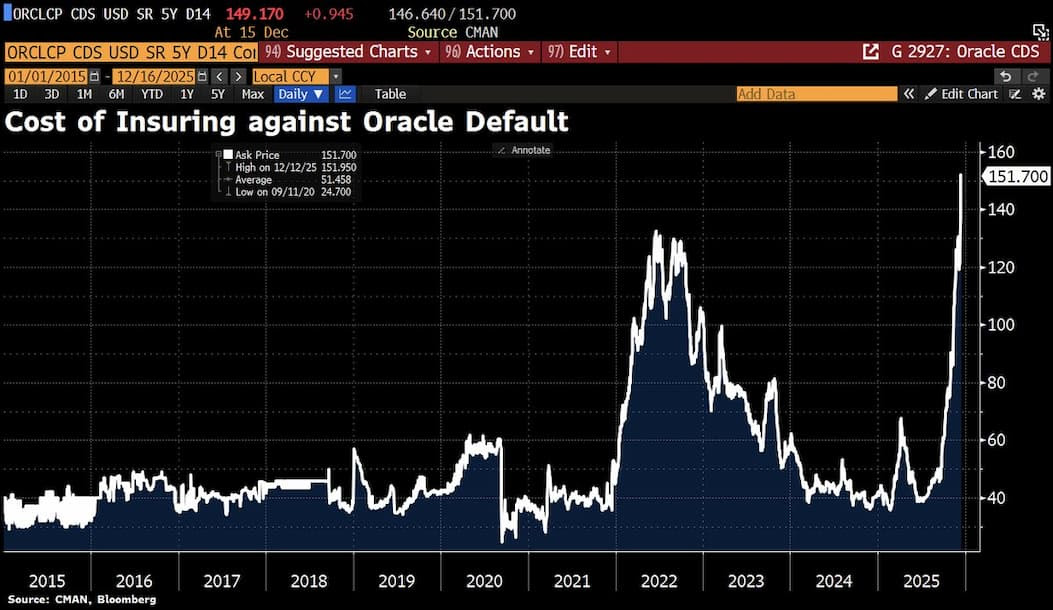
The cost of insuring Oracle’s debt against default has climbed to its highest level since 2009. Based on current credit-market pricing, investors are now assigning roughly a 15% probability that Oracle could default on its debt — a meaningful change in how the company’s risk is being viewed.
Oracle carries over $100 billion in debt, along with long-term lease commitments that extend well into the next decade. At the same time, many of its largest AI-related contracts are structured to deliver most of their revenue years in the future, not immediately.
Put simply, Oracle is spending large amounts of cash today while much of the expected payoff comes later. That timing mismatch — and the growing risk it creates — is what credit markets are now focused on.
Join LevelFields now to be the first to know about events that affect stock prices and uncover unique investment opportunities. Choose from events, view price reactions, and set event alerts with our AI-powered platform. Don't miss out on daily opportunities from 6,300 companies monitored 24/7. Act on facts, not opinions, and let LevelFields help you become a better investor.

AI scans for events proven to impact stock prices, so you don't have to.
LEARN MORE