


.png)
L2 Weekly Stock Market News Analysis
January 4th, 2025

TLDR:
Markets headed into the new year with a cautious tone as investors prepared for the first full trading week of 2026 and a return to normal volumes after the holiday slowdown. While a major geopolitical development unfolded over the weekend with the U.S. capture of Venezuelan President Nicolás Maduro, markets have not yet had a chance to fully respond, leaving energy, commodities, and risk sentiment as key areas to watch as trading resumes.
The Venezuela news is likely to refocus attention on oil, shipping routes, and U.S.–China dynamics. With desks reopening, investors are balancing that uncertainty against a heavy week of labor market data and economic releases that will help reset expectations for growth and rates early in the year.
Sector performance reflected defensive positioning rather than rotation. Energy (XLE) was the only major sector to finish higher (+0.77%), while most others declined, led by Consumer Discretionary (XLY) (-2.59%), Financials (XLF) (-1.72%), Technology (XLK) (-1.59%), and Industrials (XLI) (-1.51%). The pullback across cyclicals and growth signaled caution ahead of a data-heavy week, with investors waiting for clearer signals on both macro fundamentals and geopolitical fallout.
The U.S. Captures Venezuela’s Leader
Over the weekend, the United States carried out a direct operation in Venezuela, capturing longtime president Nicolás Maduro and flying him to the U.S. to face criminal charges. The operation included air and naval activity around Caracas, temporary power outages, and a rapid extraction that removed Maduro while leaving much of the existing government intact.
President Trump said the U.S. plans to “run Venezuela” for now, but the White House offered few details on what that would mean in practice. Rather than a full regime overhaul, the administration appears to be pursuing a narrower strategy: pressuring remaining leadership — including Vice President Delcy Rodríguez — to cooperate, while keeping the option of further military action on the table if that cooperation fails.
This ambiguity matters for markets. The removal of one leader does not automatically restore stability. Venezuela’s institutions, security forces, and oil infrastructure remain fragile after years of mismanagement and sanctions. Investors are therefore less focused on the symbolism of Maduro’s capture and more focused on what comes next — especially around oil policy, sanctions, and control of exports.

Why Venezuela Matters — Oil, Resources, and Control Closer to Home
Venezuela holds roughly 300 billion barrels of proven oil reserves, the largest in the world. Crucially, much of this oil is heavy crude, which is thick, expensive to extract, and harder to refine than light shale oil. Years of sanctions and underinvestment left Venezuela without the advanced infrastructure — such as steam injection — needed to produce it efficiently.
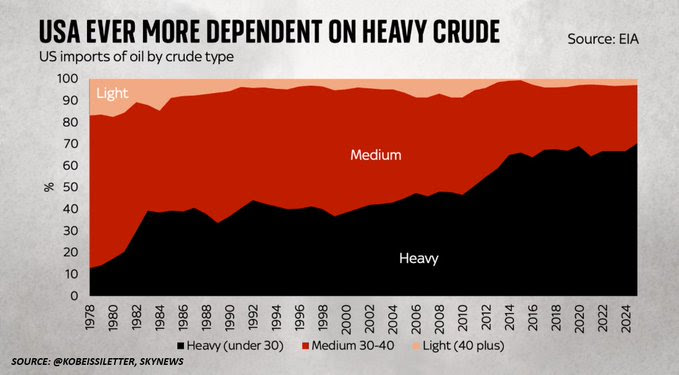
This matters because the U.S. has quietly become highly dependent on heavy crude. In the 1980s, only about 10–20% of U.S. crude imports were heavy oil. Today, that figure is closer to 70%. At the same time, Texas and Louisiana host some of the largest heavy-crude refineries in the world, specifically designed to process this type of oil.
In other words, Venezuela doesn’t just have oil — it has the kind of oil U.S. refineries are built to run.
That helps explain the strategic focus. In the short term, sanctions, damage, and political risk can disrupt supply and push prices higher. Over the long term, if Venezuelan infrastructure is repaired and production recovers, heavy crude from Venezuela could replace other sources and lower global oil prices modestly— though that process would likely take years.
Beyond oil, Venezuela also sits next to critical shipping lanes connecting the Caribbean Sea and Gulf of Mexico to U.S. refineries and global trade. Control and stability in this region affect not just energy, but freight costs, insurance, and supply chains across the Americas.

China’s Reaction — Energy Leverage Shifts to the U.S.
China is Venezuela’s largest oil buyer, with Venezuelan crude accounting for roughly 5% of China’s annual oil imports. That makes Beijing directly exposed to any change in control over Venezuelan supply.
Following the U.S. operation, China said it was “deeply shocked” and strongly condemned the strikes. The reaction reflects more than politics: it underscores China’s vulnerability when key energy suppliers fall under U.S. influence.
President Trump has said the U.S. will keep Venezuelan oil flowing to China, even as Washington asserts control over the transition. For markets, that distinction matters. Rather than cutting China off, the U.S. appears to be positioning itself as the intermediary — shaping access, pricing, and investment terms.
The practical implication is increased U.S. energy leverage. If Venezuelan production is restored under U.S.-aligned oversight, American producers, refiners, and service companies stand to benefit, while China remains dependent on supply routed through U.S.-controlled channels.

How To Position — Defense, Energy, and Supply Chains
Rather than making sweeping bets, investors typically express views through sectors most directly affected by heightened geopolitical risk.
Defense and surveillance.
When military assets are deployed and the U.S. signals readiness to enforce outcomes, demand rises for aircraft, ships, and monitoring systems. Companies such as Lockheed Martin, Northrop Grumman, Huntington Ingalls Industries, General Dynamics, and BWX Technologies tend to benefit when regional security becomes a higher priority, even without a prolonged conflict.
Energy and refining.
Energy markets respond quickly to uncertainty around sanctions, exports, and shipping insurance. Chevron is particularly sensitive given its existing Venezuelan license, which could expand or contract depending on cooperation. ExxonMobil and Hess are exposed through nearby offshore production, while refiners such as Valero Energy and Marathon Petroleum depend on stable crude flows through the Caribbean and Gulf Coast.
In the short term, oil prices can rise on disruption risk. Over the longer term, successful rehabilitation of Venezuelan supply could act as a ceiling on prices — a dynamic investors will watch closely.
Consumer goods and commodities.
Second-order effects can reach everyday products. Coffee companies like Starbucks, Nestlé, Keurig Dr Pepper, and JDE Peet’s are exposed not because Venezuela is a major producer, but because it sits between Brazil and Colombia and key consumer markets. Rising military risk in transit zones often increases freight and insurance costs, which flow directly into input prices.
Last's Weeks Sector Winners & Losers
Sector performance skewed decisively risk-off, with Energy the lone area of strength. Energy Select Sector SPDR Fund (XLE) rose +0.77%, supported by oil-price stability and renewed geopolitical focus on energy security.
All other major sectors finished lower. Consumer Discretionary Select Sector SPDR Fund (XLY) led the downside at -2.59%, reflecting pressure on rate-sensitive and consumer-facing names. Financial Select Sector SPDR Fund (XLF) fell -1.72%, while Information Technology Select Sector SPDR Fund (XLK) declined -1.59%, as higher yields and continued scrutiny around AI spending weighed on growth valuations.
Cyclical sectors also struggled, with Industrial Select Sector SPDR Fund (XLI) down -1.51% and Materials Select Sector SPDR Fund (XLB) off -1.07%. Defensive areas failed to provide shelter: Consumer Staples Select Sector SPDR Fund (XLP) fell -0.56%, Health Care Select Sector SPDR Fund (XLV) declined -0.64%, and yield-sensitive sectors like Utilities Select Sector SPDR Fund (XLU) and Real Estate Select Sector SPDR Fund (XLRE) slipped -0.28% and -0.22%, respectively.

Upcoming Events This Week
The first full trading week of the year brings a return to heavier data flow and normal trading volumes after the holiday lull. In the U.S., attention will center on the labor market, with the December jobs report, JOLTS, and ADP updates, alongside ISM PMIs and Michigan consumer confidence for insight into growth momentum and hiring demand.
Globally, China’s PMIs and inflation data will be closely watched for signals on activity and pricing trends, while Europe’s focus turns to inflation, unemployment, and manufacturing data from the Eurozone, Germany, and Switzerland. India’s FY26 GDP release and Canada’s employment report round out a data-heavy week that will help markets recalibrate expectations after the holidays.

Company News
LevelFields AI Stock Alerts Last Week
Praxis Precision Medicines (PRAX) +13.3% on FDA Breakthrough Therapy Designation
Praxis Precision Medicines surged 13.28% in one session after the FDA granted Breakthrough Therapy Designation (BTD) to ulixacaltamide HCl for the treatment of essential tremor. The designation was based on positive topline Phase 3 data from the Essential3 program and follows a recently completed pre-NDA meeting with the FDA.
BTD is a meaningful regulatory milestone, signaling the FDA’s view that the drug may offer substantial improvement over existing therapies and enabling accelerated development and review. Praxis remains on track to submit its NDA in early 2026, materially improving visibility on a potential approval timeline. With essential tremor affecting roughly 7 million patients in the U.S. and limited effective treatment options, the announcement refocused investor attention on pipeline value and commercialization potential rather than near-term biotech volatility.
Eightco (ORBS) +10.2% on Massive Buyback Authorization
Eightco jumped 10.2% in one day after announcing a share repurchase program of up to $125 million, representing roughly 25% of its market capitalization. Management framed the buyback as a strong vote of confidence in the company’s valuation, strategy, and partnership pipeline.
The authorization is notable given Eightco’s balance sheet and strategic positioning, including its Worldcoin (WLD) treasury, which holds over 10% of the circulating WLD supply, and its focus on digital identity and Proof-of-Human authentication through its Infinity platform.

Introducing the LevelFields Portfolio Tracker
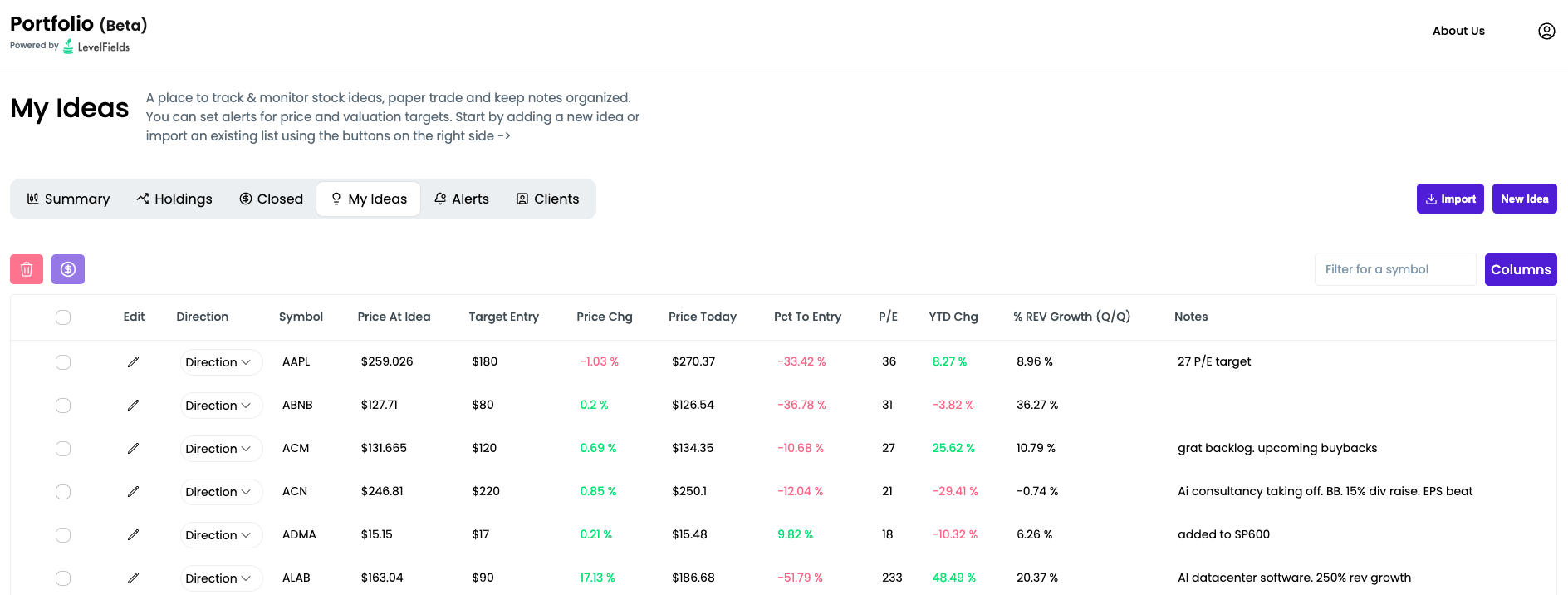
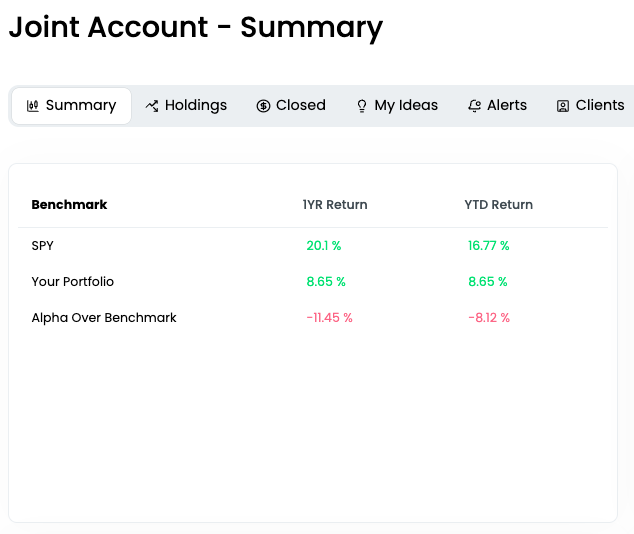
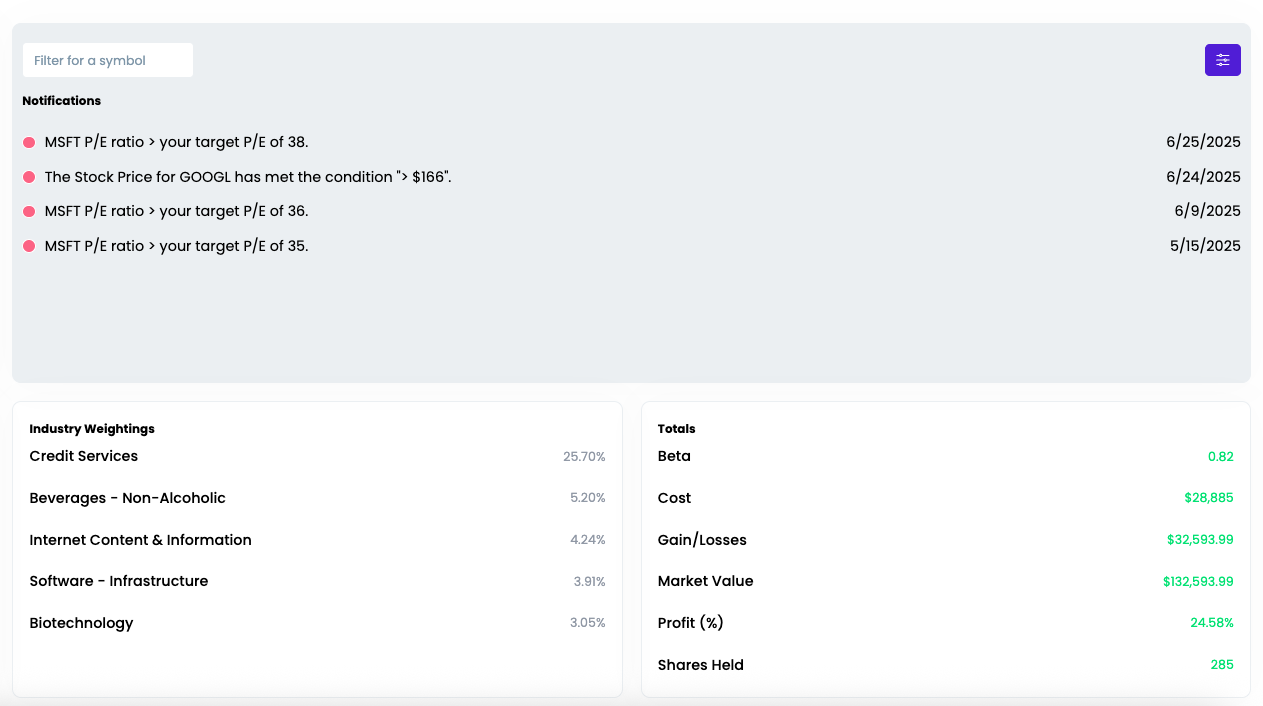
We’ve just launched the new LevelFields Portfolio platform — a centralized dashboard built for active investors and wealth managers to track their trades, organize trade ideas, and monitor real or prospective portfolios.
We've replaced Excel and Google Sheets trade tracking with software that updates as prices and valuations of stocks change, so you don't lose money by missing great entry and exit points.
You can sign up for free!
What it does:
- Lets you add both real positions and idea-stage trades into one unified portfolio.
- Tracks allocation, profit/loss, KPIs, P/E, price targets, and thesis notes in one place.
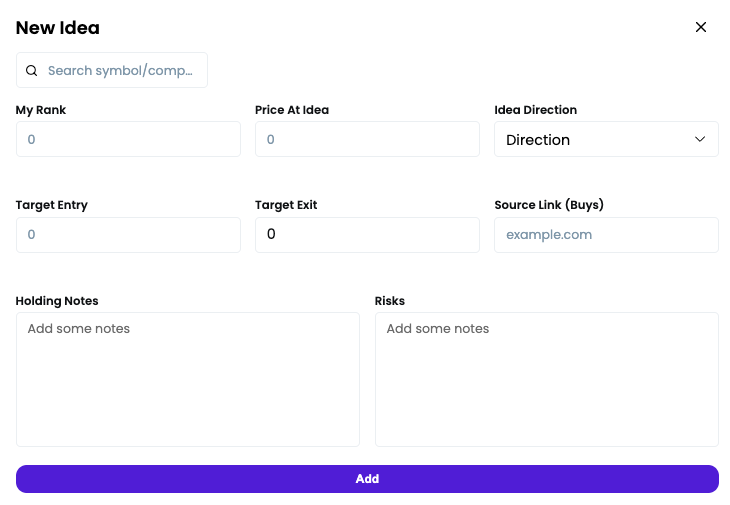
- Allows you to set real-time alerts on valuation changes, price moves, and price targets using bulk editing (e.g. one alert for all holdings).
- Lets you toggle any ticker between “Idea → Holding → Closed” while preserving the original trade thesis and exit notes.
- Designed for traders, advisors, and fund managers who need a live, organized view of positions + rationale, not just a static spreadsheet of tickers.
- Import CSV file of existing ideas, notes, and portfolio holdings for a quick start
- Keep track of reasons you bought and sold to analyze your performance and for compliance
- Design your own model portfolios based on allocations, sector, and industry

.png)
How to use LevelFields for Options Trading
Tracking Stocks Without Spreadsheets
The Truth About Dividend Stocks
What's LevelFields' Premium Membership Provide?
This is not financial advice. All information represent opinions only for informational purposes. Given the vast number of stocks we cover in these reports, assume staff covering stocks have positions in stocks discussed.
Have feedback or a request for specific data? Drop us a note at support@levelfields.ai