

AI trade pressure builds as investors watch Big Tech earnings, semiconductor weakness, and market rotation.
Sectors & Industries
July 20, 2026


Table of Contents
Momentum has broken hard, hedge funds have been de-grossing technology, and semiconductor stocks have gone from market leaders to one of the weakest parts of the tape. The SOX is now in a bear market after one of the fastest bouts of underperformance versus the S&P 500 in decades, while tech investors have cut exposure aggressively over the past six weeks. Even so, this still looks more like a violent reset than a clean fundamental break. Positioning has been washed out quickly, volatility has exploded, and a growing number of high-quality AI names are now moving into oversold territory.
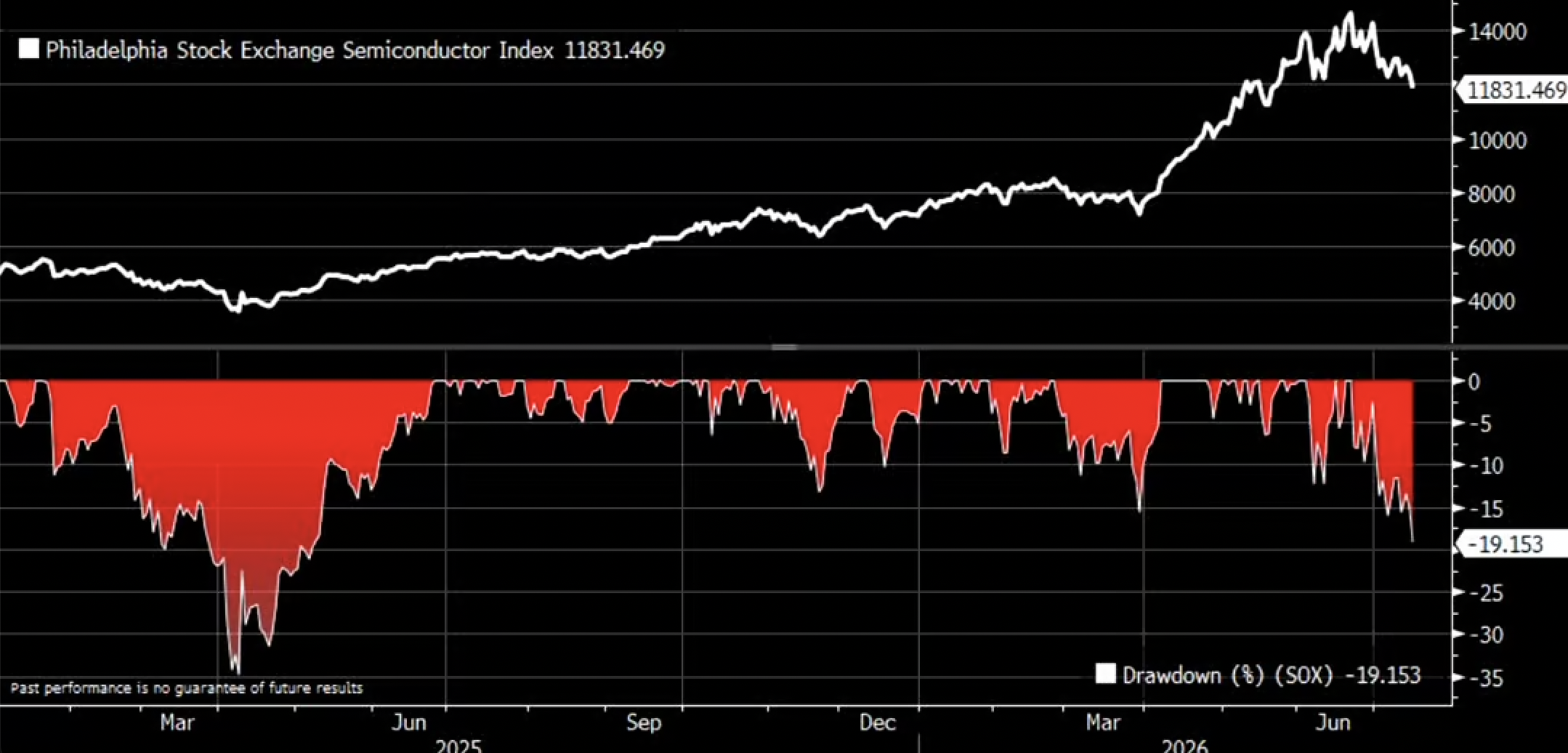
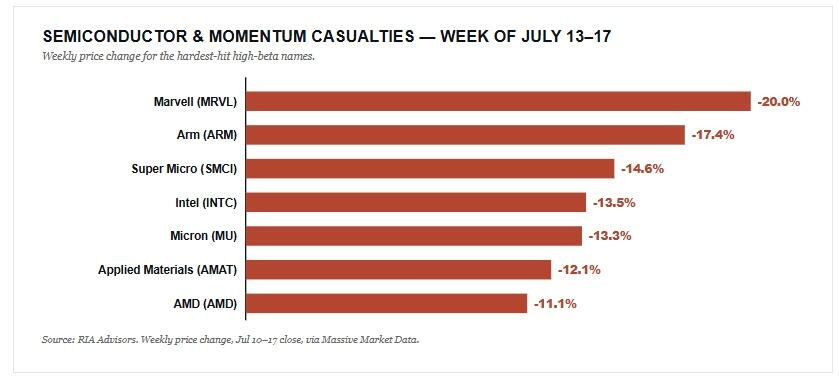
That is why the trade ideas here need to be selective. The higher-quality way to buy this drawdown is still through the core AI infrastructure names closest to real spend, such as Nvidia (NVDA), Broadcom (AVGO), and Micron (MU), rather than lower-quality momentum beta. For investors looking for more tactical setups, the oversold list is getting interesting, especially names such as Synopsys (SNPS), Cadence (CDNS), Jabil (JBL), GlobalFoundries (GFS), and MACOM-like second-order semis such as MTSI and NVTS. The key is to treat this as a reset in leadership and positioning, not a signal to blindly chase every AI stock that is down 20%. The best risk/reward is likely in high-quality semis, AI hardware, and select design/software names where the selloff has outrun any actual change in demand.
The most important thing to understand about this selloff is that money is not leaving the market all at once. It is rotating out of the most crowded corner. The equal-weight S&P 500 held up far better than the cap-weighted index, defensive and cyclical value groups finished green, and leadership quietly shifted toward energy, real estate, staples, financials, and security software. At the same time, mega-cap AI leaders such as Microsoft and Amazon held up far better than the speculative fringe. That is not what broad liquidation looks like. It is what a leadership change looks like.
That distinction matters for trade ideas. If this is a rotation rather than a collapse, investors do not need to stay trapped in the same crowded hardware names. A cleaner approach may be to look at companies benefiting from AI adoption further downstream, especially software and platform businesses that are less tied to semiconductor volatility. Palo Alto Networks (PANW) and CrowdStrike (CRWD) stand out as ways to stay exposed to enterprise AI demand without relying on the same chip bottlenecks. Microsoft (MSFT) and Amazon (AMZN) also look attractive because they sit closer to the customer, the cloud, and the application layer. For investors looking beyond technology, large banks such as JPMorgan (JPM) and energy names such as Exxon (XOM) fit the parts of the market that have been holding up best as leadership broadens.
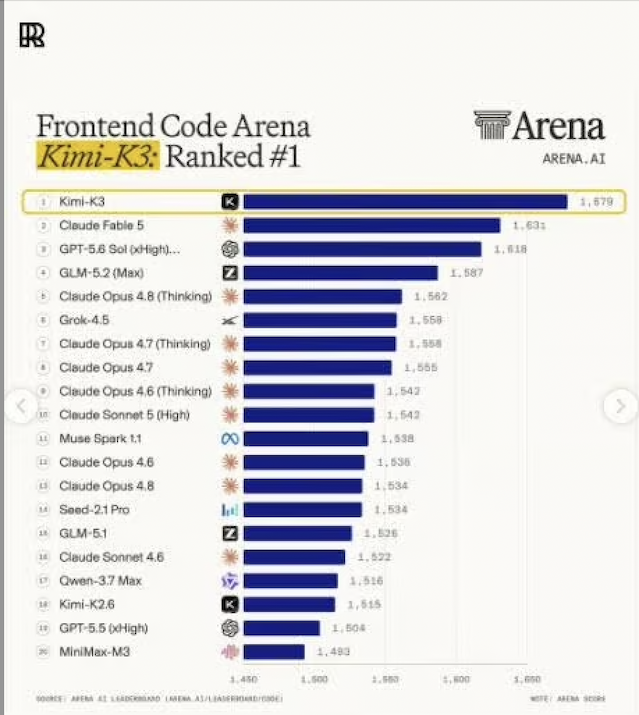
The bigger risk now is that AI may be getting cheaper faster than the market expected. For the past two years, investors rewarded the companies selling the tools needed to build AI: chips, memory, networking, and data centers. Now that may be starting to change. Moonshot’s new Kimi K3model is a good example. It reportedly jumped to the top of a major coding leaderboard, can handle very large amounts of information at once, costs much less than some leading U.S. models, and is expected to become openly available later this month. In broader text rankings, it also finished ahead of Anthropic’s Opus 4.8 while costing about 40% less, which is exactly why it matters. It does not have to be the best model in the world to change the market. It only has to be good enough and cheap enough to make customers think twice about paying much more elsewhere.
That matters because the AI trade has been built on the idea that the companies spending the most money would also keep the strongest pricing power. If rivals can offer similar results for far less, that puts pressure on margins and makes all that spending harder to justify. In plain English: if the same AI job can be done for a lot less money, some of today’s winners may not earn as much as investors expect.
There is also a stock angle here. Alibaba is one of Moonshot’s biggest backers, with a previously disclosed stake of about 36% in the company, and Alibaba’s ADRs have risen roughly 10% over the past month as investors have started paying more attention to China’s AI ecosystem. That makes Alibaba (BABA) one of the more interesting ways to gain exposure to this shift without buying the most crowded U.S. hardware names.
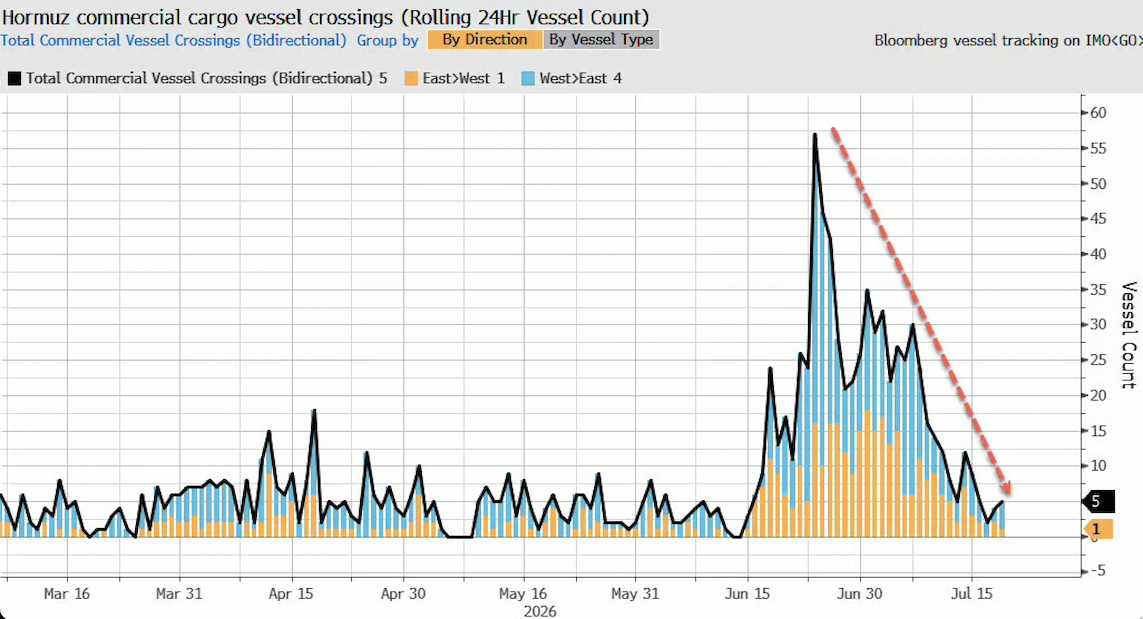
The Iran story is no longer just about whether ships can move through the Strait of Hormuz. The conflict is widening. U.S. strikes have hit Qeshm Island and other targets deeper inside Iran, while Iran has responded with drone and missile attacks on U.S. bases and critical infrastructure across Kuwait, Qatar, and Bahrain. Two U.S. service members were killed in Jordan, Bahrain intercepted aerial attacks, and Kuwait’s power and desalination plants were hit for a second straight day. At this point, the interim ceasefire framework looks effectively dead.
That shift matters because this is starting to look less like a narrow shipping disruption and more like a broader regional infrastructure conflict. Civilian infrastructure is being hit, airports and ports are being evacuated, and even attempts to move vessels through Hormuz are being contested. Iran says vessels using unauthorized routes were stopped or turned back, while regional states are already scrambling for alternatives, including fuel moving by truck through Syria to bypass the Strait.
That is why oil is reacting the way it is. Brent jumped toward $88 last week, weekend crude moved higher again, and traders are warning that the buffers which helped cushion the first phase of the conflict have been worn thin. The real risk is not just an oil spike for a day or two. It is that normalization keeps getting pushed further out, forcing markets to price a higher floor for energy for longer than expected.
For investors, the trade ideas remain fairly straightforward. Exxon (XOM), Chevron (CVX), and the Energy Select Sector SPDR (XLE) are still the cleanest ways to express a higher-oil view. If you want a geopolitical hedge rather than a pure energy trade, defense names such as RTX (RTX), L3Harris (LHX), and Northrop Grumman (NOC) still make sense. The key takeaway is that Iran is no longer just a Hormuz headline. It is becoming a wider regional conflict that can keep pressure on oil, inflation, and market leadership.
Join LevelFields now to be the first to know about events that affect stock prices and uncover unique investment opportunities. Choose from events, view price reactions, and set event alerts with our AI-powered platform. Don't miss out on daily opportunities from 6,300 companies monitored 24/7. Act on facts, not opinions, and let LevelFields help you become a better investor.

AI scans for events proven to impact stock prices, so you don't have to.
LEARN MORE