

Home Depot, Target, TJX, and Walmart earnings will reveal whether consumers are trading down as economic growth slows.
Sectors & Industries
August 17, 2026


Table of Contents
Inflation moved in the right direction this week.
July CPI rose just 0.1% month over month and 3.4% year over year, down from 3.5% in June. Core CPI slowed to 2.5%, its lowest annual rate since 2021.
Producer prices told a similar story. July PPI was flat month over month, while annual producer inflation fell from 5.5% to 4.7%. Core PPI also slowed to 4.2%.
The combination of softer inflation and July's weak employmentreport sharply reduced expectations for another Fed hike in September.
That is good news for markets.
But it does not mean the inflation problem is over.
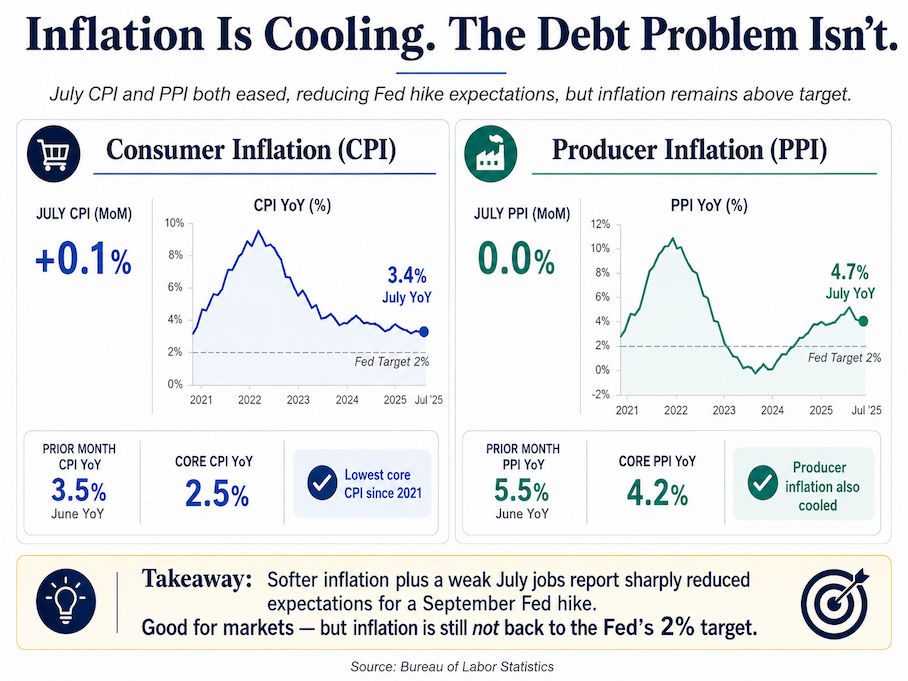
July marked the 65th consecutive month that headline CPI inflation has remained above 2%.
The streak began in March 2021, when CPI jumped to 2.6% from 1.7% the month before. More than five years later,inflation is still running at 3.4%.
The Fed technically targets PCE inflation, not CPI, but the broader point is the same: inflation has remained persistently above the level policymakers consider consistent with price stability. The Fed's own preferred measure also remains above its 2% objective.
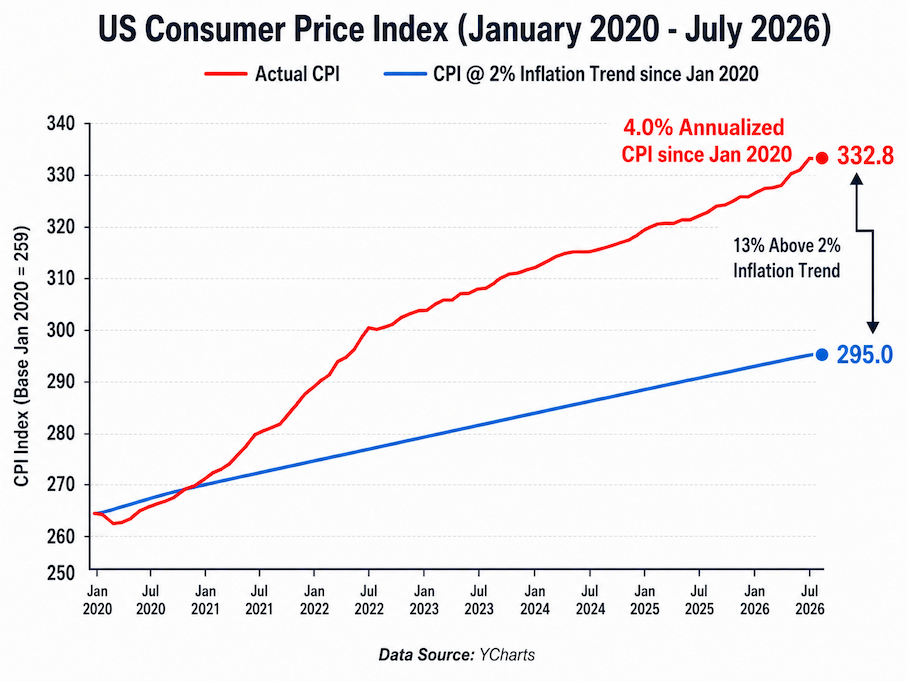
There is also an important distinction between lower inflation and lower prices.
When inflation falls from 5% to 3%, prices are not reversing. They are simply rising more slowly.
That means households are still living with the cumulative price increases of the past five years even as monthly inflation reports improve.
The market is focused on the rate of change. Consumers are living with the price level.
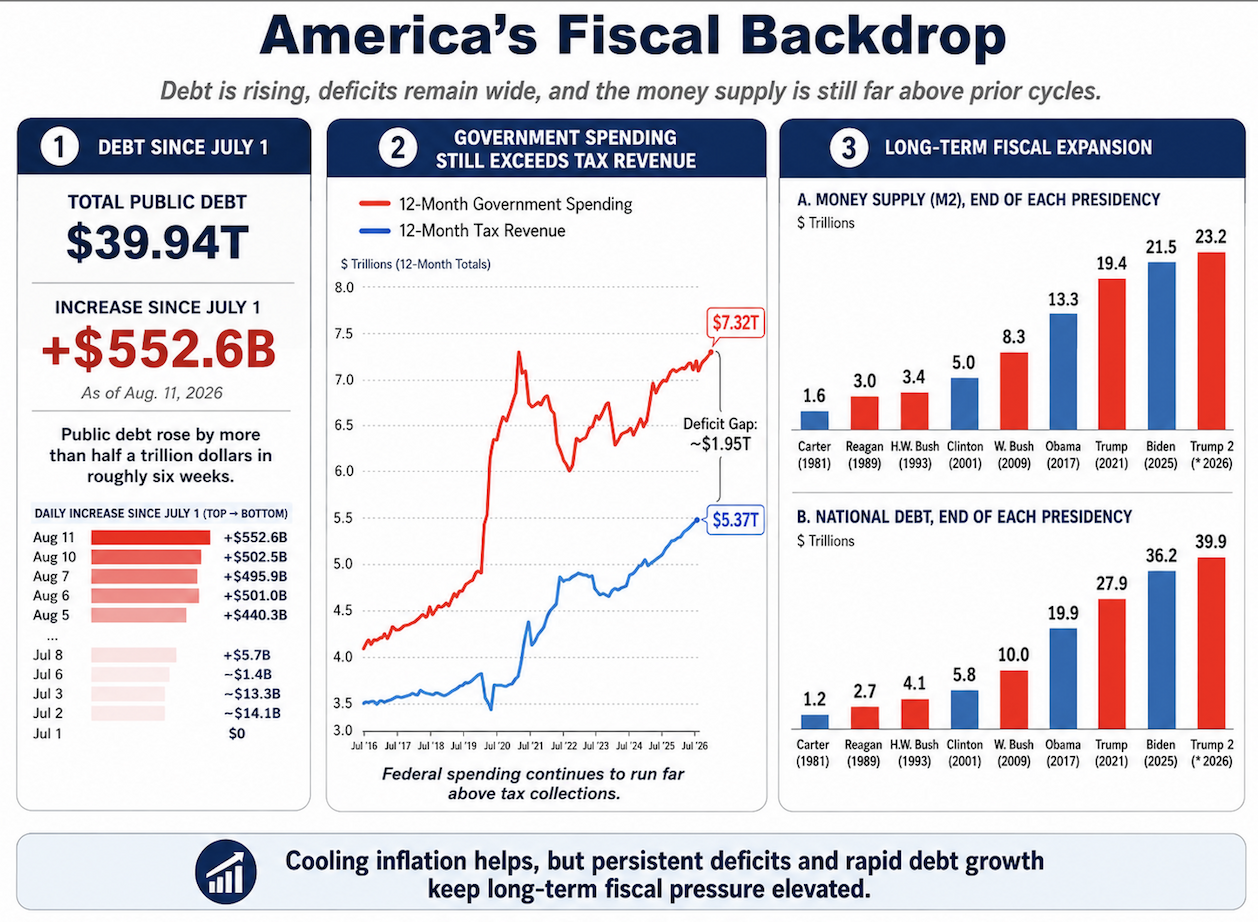
The more important long-term issue may now be what persistent inflation means for a government carrying nearly $40 trillion of debt.
Washington ran a record $432 billion budget deficit in July, pushing the fiscal 2026 deficit to $1.799 trillionwith two months still remaining in the fiscal year. That already exceeds the entire $1.775 trillion deficit recorded in fiscal 2025.
Gross federal debt stood near $39.4 trillion in early July and is now approaching $40 trillion.
The problem is not simply the amount of debt. It is the cost of financing it.
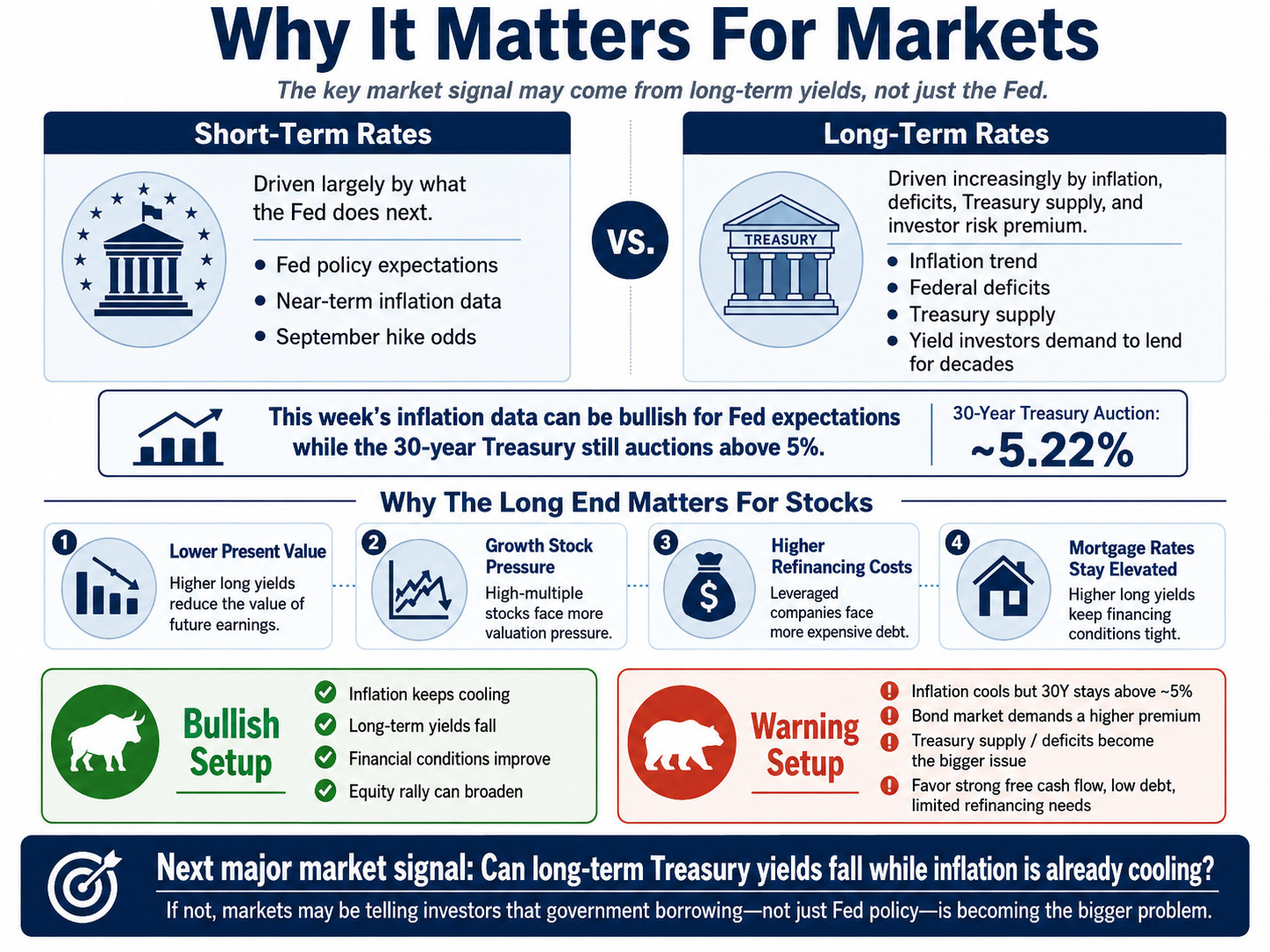
This week, the Treasury sold 30-year bonds at a yield of roughly 5.22%—the highest auction yield since 2001.
This is not a Treasury funding crisis. Investors are still buying the debt.
The issue is the price they are demanding to own it.
The mechanics are simple:
Large Deficits → More Treasury Issuance → Higher Interest Costs → Larger Deficits → More Borrowing
Every new bond issued at today's rates is more expensive than debt issued when rates were near zero.
Bank of America estimatesannual U.S. debt-service costs have already climbed to roughly $1.5 trillion.
That creates an increasingly difficult cycle. Cutting rates would reduce financing costs over time, but easing monetary policy too quickly could revive inflation. Keeping rates high helps fight inflation but makes the government's debt burden more expensive.
This creates an important disconnect.
Short-term rates are largely about what the Fed does next.
Long-term rates increasingly reflect inflation, deficits, Treasury supply, and how much investors need to be paid to lend Washington money for decades.
That is why this week's inflation data can be bullish for Fed expectations while the 30-year Treasury still auctions above 5%.
For stocks, the long end matters enormously. Higher Treasury yields reduce the present value of future earnings, pressure high-multiple growth stocks, raise refinancing costs for leveraged companies, and keep mortgage rates elevated.
The 30-year auction near 5.22% provides a useful reference point. If long-term yields begin falling alongside inflation, financial conditions improve and the equity rally has room to broaden.
If the 30-year remains above roughly 5% despite softer inflation, the bond market is sending a different message: investors still require a large premium to absorb growing Treasury supply. That environment favors companies with strong free cash flow, low debt, and limited refinancing needs over businesses whose valuations depend on cheap capital.
The next major market signal may therefore not come from whether the Fed raises rates another 25 basis points. It may come from whether long-term Treasury yields can fall when inflation is already cooling.
If inflation falls but long yields stay elevated, the market may be signaling that government borrowing and Treasury supply—not just Fed policy—are becoming the bigger problem.
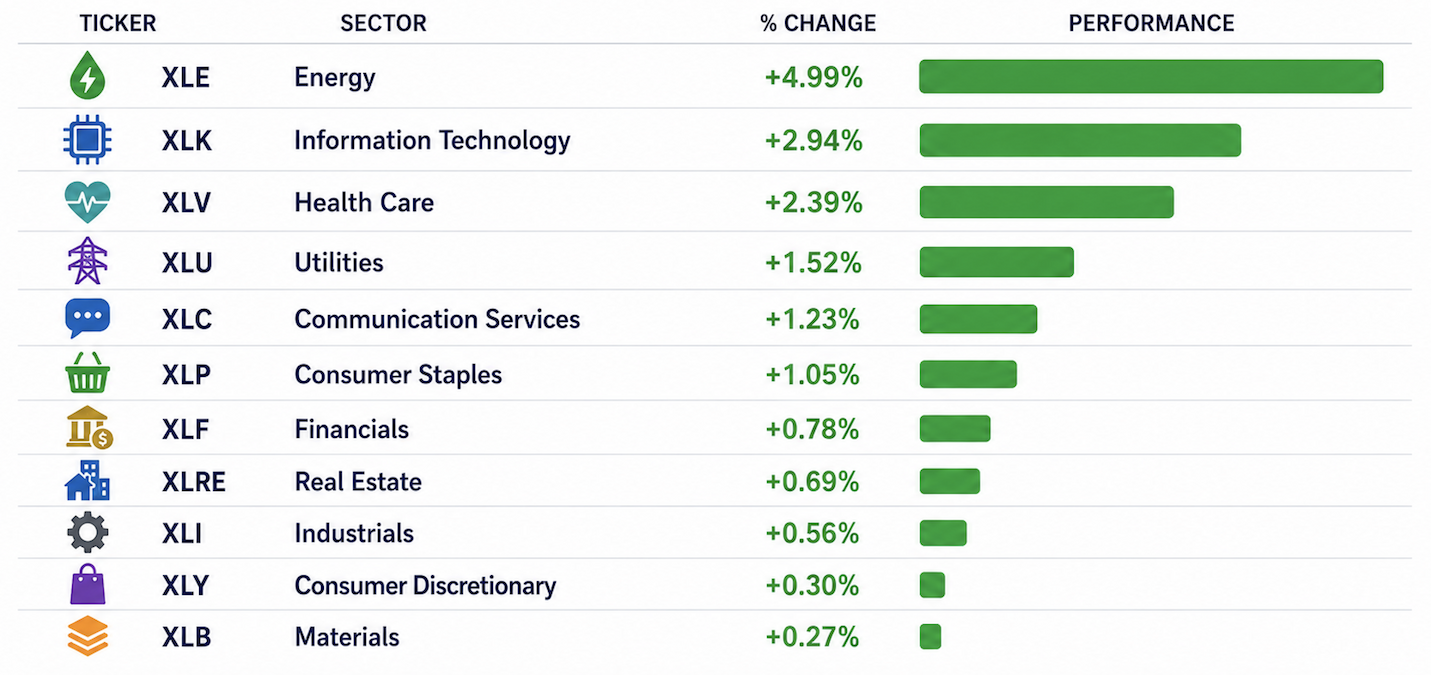
Sector performance was broadly positive last week, with every major sector finishing higher. Energy (XLE +4.99%) led the market, followed by Information Technology (XLK +2.94%), Health Care (XLV +2.39%), and Utilities (XLU +1.52%). Communication Services (XLC +1.23%) and Consumer Staples (XLP +1.05%) also posted solid gains.
Financials (XLF +0.78%), Real Estate (XLRE +0.69%), Industrials (XLI +0.56%), Consumer Discretionary (XLY +0.30%), and Materials (XLB +0.27%) finished higher but lagged the broader market.
The biggest takeaway is the breadth of the rally. Leadership was split between growth areas like Technology and Communication Services and more defensive sectors like Health Care and Utilities, while Energy was the clear outperformer.
Join LevelFields now to be the first to know about events that affect stock prices and uncover unique investment opportunities. Choose from events, view price reactions, and set event alerts with our AI-powered platform. Don't miss out on daily opportunities from 6,300 companies monitored 24/7. Act on facts, not opinions, and let LevelFields help you become a better investor.

AI scans for events proven to impact stock prices, so you don't have to.
LEARN MORE