


.png)

L2 Weekly Stock Market News Analysis
June 8th, 2026

TLDR:
The Nasdaq 100 suffered its largest decline since April 2025, semiconductor stocks experienced their worst selloff since Covid, and South Korea's AI-heavy market plunged as investors rushed to lock in profits from one of the most crowded trades in the world. At the same time, stronger-than-expected U.S. employment data pushed Treasury yields higher and caused markets to scale back expectations for future Federal Reserve rate cuts.
Importantly, nothing fundamentally changed about AI demand. Data-center spending, semiconductor demand, and enterprise AI adoption all remain strong. Instead, after one of the most powerful rallies in recent market history, investors began questioning whether valuations have started pricing in flawless execution, unlimited capital, and a future with virtually no obstacles.
That debate is becoming increasingly important as AI's growth collides with real-world constraints. Gallup recently found that 71% of Americans oppose building AI data centers in their local communities, while new labor market data showed AI was the leading reason cited for layoffs for the third consecutive month. More than 87,000 job cuts have already been attributed to AI this year, surpassing all of 2025.
The key question for investors is no longer whether AI works.
The question is whether society can build the power plants, data centers, transmission lines, water infrastructure, and political support necessary to sustain the next phase of growth.
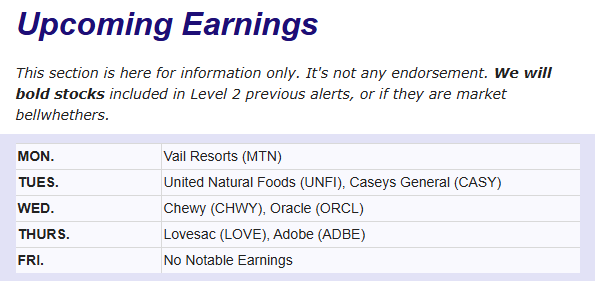
Looking ahead, investors will closely watch U.S. CPI and PPI inflation reports, China's trade and inflation data, interest rate decisions from the European Central Bank and Bank of Canada, developments surrounding U.S.-Iran negotiations, and OPEC+'s upcoming production meeting as markets continue debating whether inflation, rates, and infrastructure constraints are becoming the next challenge for the AI boom.
The AI Trade Finally Hits Resistance
For the first time in months, investors are being forced to confront a possibility that the market has largely ignored:
What if AI's biggest challenge isn't demand?
This week, the Nasdaq 100 suffered its worst decline since April 2025. Semiconductor stocks experienced their largest one-daydrop since Covid. Bitcoin fell below $60,000. Meanwhile, South Korea — one of the most AI-exposed markets in the world — experienced a violent reversal as investors rushed to lock in profits from one of the most crowded trades on earth.
South Korea is particularly important because it became one of the clearest expressions of global AI enthusiasm.
Retail investors, institutions, and even pension capital poured into semiconductor and AI-linked equities as enthusiasm surrounding Nvidia, memory chips, and data-center spending reached a fever pitch.
The data:
• The Nasdaq 100 fell 4.8%, its largest decline since April 2025
• The Philadelphia Semiconductor Index (SOX) suffered its biggest one-day drop since Covid
• South Korea's AI-heavy market fell nearly 20% from recent highs in just days
• The leveraged South Korea ETF (KORU) plunged more than 40%

• Bitcoin fell below $60,000 as speculative assets sold off broadly
At the same time, the macro backdrop became less supportive.
The May jobs report surprised to the upside with 172,000 jobs added versus expectations of roughly 88,000. Treasury yields surged as traders began pricing in the possibility that the Federal Reserve may need to keep rates higher for longer.
That matters because the AI boom has been fueled by two assumptions:
• Explosive earnings growth
• Abundant capital
If interest rates stay elevated, capital becomes more expensive. And if AI companies continue spending hundreds of billions on infrastructure, investors become more sensitive to valuation.
The important takeaway is that nothing fundamentally changed.
AI demand remains strong.
Data-center spending remains strong.
Corporate adoption remains strong.

The Market Is Pricing Perfection
The issue isn't whether AI is real.
That debate is over.
The issue is whether investors have begun pricing AI as if nothing can go wrong.
Markets increasingly assume:
• Unlimited power availability
• Unlimited data-center construction
• Unlimited political support
• Unlimited access to capital
• Unlimited infrastructure expansion
History suggests reality is rarely that simple.
Railroads needed land.
Oil needed pipelines.
The internet needed fiber.
AI needs power plants, transmission lines, water systems, cooling infrastructure, and community approval.
And those constraints are beginning to appear simultaneously.
That is why the recent selloff matters.
The market isn't questioning AI.
The market is beginning to question whether AI can scale as smoothly as current valuations imply.

Politics Meets Productivity: Data Centers Enter the Midterms
Earlier this year, Zohran Mamdani's victory in New York shocked investors because it revealed how quickly economic frustrations can become political movements.
The lesson was never really about New York.
It was about incentives.
When voters feel they are bearing the costs of economic change while someone else captures the rewards, political resistance grows.
That same dynamic may now be emerging around artificial intelligence.
The AI industry talks about productivity gains, economic growth, and technological leadership.
Voters increasingly see something different:
• Massive water consumption
• Fewer entry-level jobs
• Tax incentives for large technology companies
• Data centers being built in their communities
• 71% of Americans oppose building AI data centers in their local area
• 48% strongly oppose them

• Opposition is higher than local opposition to nuclear power plants
• Democrats, Republicans, and Independents all oppose new data-center construction by majorities
• Environmental concerns, electricity costs, and water consumption are the most commonly cited objections
That matters because AI cannot scale without physical infrastructure.
The market has spent years asking whether AI works.
Voters are starting to ask whether they want to live next to it.

The Next Generation Feels The Pressure
Much of the AI debate is happening among investors, executives, and policymakers.
The people most affected may be younger workers.
Many of the jobs AI is disrupting first are the jobs people traditionally use to begin their careers:
• Administrative work
• Customer support
• Basic coding
• Research
• Marketing
• Junior analyst roles
And the labor market data is beginning to show why those concerns are growing.
Despite a stronger-than-expected May jobs report and unemployment remaining near historic lows, U.S. technology companies announced 38,242 job cuts in May — the highest monthly total since August 2024 — according to Challenger, Gray & Christmas.
More notably, AI was cited as the leading reason for layoffs for the third consecutive month.
The data:
• 38,579 layoffs were directly attributed to AI in May alone
• AI accounted for40% of all announced layoffs during the month
• AI-related layoffs represented just 7% of announced cuts in January, rising to 25% in March, 26% in April, and 40% in May
• More than 87,700 layoffs have been attributed to AI so far in 2026
• AI-related job cuts have already surpassed the 54,836 reported during all of 2025
What's remarkable is that these layoffs are occurring while the broader labor market remains relatively healthy.
That means the issue isn't a collapsing labor market.
It's a changing labor market.
The concern is especially acute for younger workers entering the workforce for the first time.

The data reflects growing anxiety:
• Entry-level job postings are down roughly 32% since ChatGPT launched
• 40% of employers say they expect to reduce headcount because of AI
• 76% of Gen Z workers worry they may be locked out of parts of the labor market
• Even Federal Reserve Chair Jerome Powell has warned that AI could eliminate entire categories of entry-level work
This is where politics enters the equation.
The issue is no longer whether AI creates productivity.
The issue is who benefits from that productivity.
Historically, when economic gains become concentrated while workers feel increasingly insecure, voters begin demanding political responses.
That is exactly the type of environment that creates unexpected election outcomes.

Investor Angle – Investing In The Constraints
The first phase of the AI trade rewarded chipmakers.
The next phase may reward the companies solving AI's real-world constraints.
Power Infrastructure
VST – Independent power generation
CEG – Nuclear generation and power supply
NRG – Dispatchable electricity generation
PWR – Grid expansion and transmission
EME – Electrical infrastructure construction
ETN – Power distribution, switchgear, and AI data-center electrical systems
HUBB – Grid modernization and transmission infrastructure
Cooling & Data Centers
VRT – Data-center cooling systems
TT – Commercial cooling and HVAC
JCI – Smart building and cooling systems
MOD – Liquid cooling and thermal management
Water Infrastructure
XYL – Water reuse and treatment
AWK – Regulated water utility
WTRG – Water infrastructure expansion
BMI – Smart water metering
ITRI – Utility monitoring and leak detection
TTEK – Water engineering and environmental consulting
ACM – Data-center, water, and infrastructure planning
Automation & Productivity
NOW – Enterprise workflow automation
PLTR – AI-enabled decision systems
IBM – Enterprise AI and quantum computing
ORCL – AI cloud infrastructure and enterprise applications
Quantum Computing
IBM – Leading enterprise quantum platform and likely beneficiary of federal quantum funding
INFQ – Quantum networking and communications infrastructure
QBTS – Quantum optimization and annealing systems
RGTI – Superconducting quantum computing developer
IONQ – Trapped-ion quantum computing leader
QUBT – Quantum software and optimization applications
Nuclear & AI Power Demand
CCJ – Uranium producer leveraged to rising nuclear demand
LEU – Domestic HALEU and nuclear fuel supplier
BWXT – Nuclear reactors and defense nuclear infrastructure
SMR – Small modular reactor developer
OKLO – Advanced microreactors targeting AI data centers
CEG – Largest U.S. nuclear fleet
VST – Merchant power producer benefiting from AI-driven electricity demand
Photonics & Optical Networking
LITE – Optical networking and AI transceivers
AAOI – High-speed optical modules for hyperscale data centers
COHR – Lasers, optical components, and silicon photonics
MKSI – Photonics, lasers, and semiconductor process equipment
MTSI – Optical networking and compound semiconductor solutions
FN – Optical modules and AI networking hardware manufacturing
CIEN – Optical transport systems enabling AI bandwidth growth
The first phase of the AI trade rewarded companies building intelligence.
The second phase rewarded companies building data centers.
The third phase may reward companies solving the constraints AI creates: power generation, cooling, water, networking, and next-generation computing.
Last's Weeks Sector Winners & Losers
Sector leadership shifted dramatically this week as investors rotated away from many of the market's most crowded growth trades and toward areas tied to energy, industrial activity, and rising interest rates.
Information Technology (XLK +3.38%) remained the strongest sector despite Friday's sharp selloff, highlighting how powerful AI-related capital spending, semiconductor demand, and data-center infrastructure investment continue to be underneath the surface.
Energy (XLE +3.16%) finished close behind as oil prices recovered amid renewed uncertainty surrounding Iran and continued tensions around the Strait of Hormuz. Financials (XLF +1.79%) and Industrials (XLI +1.36%) also outperformed as stronger-than-expected economic data pushed Treasury yields higher and reduced expectations for near-term Fed easing.
More defensive sectors struggled. Consumer Staples (XLP -2.83%), Utilities (XLU -1.55%), and Real Estate (XLRE -0.02%) lagged as investors rotated away from traditional safe-haven sectors and toward areas benefiting from stronger growth and higher rates.
Consumer Discretionary (XLY -3.93%) and Communication Services (XLC -3.05%) were among the weakest performers as investors took profits in several of the market's biggest winners following months of AI-driven outperformance.

Upcoming Events This Week
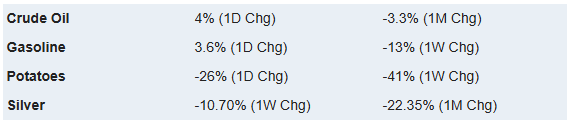
Iran and energy markets remain the biggest wildcard for global markets. Any progress toward a U.S.-Iran agreement could pressure oil prices lower, while renewed tensions risk keeping inflation elevated and central banks cautious.
Inflation data will be the primary focus. In the U.S., investors will watch CPI and PPI, the final major inflation reports before this month's Federal Reserve meeting. Existing home sales and trade balance data will also be released.
Globally, China will report inflation and trade figures, while the European Central Bank and Bank of Canada will announce interest rate decisions. Markets will also monitor UK GDP, German industrial production, and trade data for signs of economic momentum.
Energy traders will be watching OPEC+'s production meeting, while investors will closely follow SpaceX's expected IPO, which could become the largest public offering in history.

Company News
LevelFields AI Stock Alerts Last Week
Summit Midstream (SMC) +12.0% — Buyback Signals Confidence in Undervalued Shares
Summit Midstream surged roughly 12% in a single day after announcing its inaugural $35 million stock repurchase program, marking a major milestone in the company's turnaround and capital allocation strategy.
Management emphasized that the buyback authorization reflects confidence in Summit's improving financial position after significantly simplifying its balance sheet, repaying preferred stock arrears, and strengthening free cash flow generation.
The company noted that it believes its shares represent an attractive value opportunity at current prices and intends to opportunistically repurchase stock in the open market.
The announcement highlights a broader theme developing across energy and infrastructure markets: companies that spent the last several years repairing balance sheets are increasingly shifting toward shareholder-friendly capital returns through buybacks, dividends, and debt reduction.
For investors, buyback programs often serve as a strong signal that management believes the market is undervaluing the business, particularly when announced after a period of improving cash flow and financial flexibility.
Marvell (MRVL) & Flex (FLEX) — S&P 500 Inclusion
Marvell and Flex jumped after being selected for inclusion in the S&P 500, a move that typically forces index funds and benchmark-tracking portfolios to purchase shares.
Historically, newly added S&P 500 companies have outperformed the broader market as passive fund inflows and increased institutional ownership create additional demand.
LevelFields' S&P 500 inclusion scenario has generated an average 10-day return of +5.98% with a 70.6% win rate.
.png)
How to use LevelFields for Options Trading
Tracking Stocks Without Spreadsheets
The Truth About Dividend Stocks
What's LevelFields' Premium Membership Provide?
This is not financial advice. All information represent opinions only for informational purposes. Given the vast number of stocks we cover in these reports, assume staff covering stocks have positions in stocks discussed.
Have feedback or a request for specific data? Drop us a note at support@levelfields.ai