


.png)

L2 Weekly Stock Market News Analysis
June 28th, 2026

TLDR:
Micron delivered one of the strongest earnings reports in semiconductor history last week, confirming that AI demand remains exceptionally strong as customers commit billions of dollars years in advance to secure memory supply. Yet despite the blowout results, hedge funds sold technology stocks at the fastest pace in more than a decade, suggesting investors are becoming far more selective about where they want AI exposure.
That shift was reflected across sector performance. Health Care (+7.32%), Utilities (+3.22%), and Real Estate (+3.15%) led the market, while Technology (-5.40%) posted the week's largest decline despite Micron's blockbuster earnings. Rather than abandoning AI altogether, investors appear to be broadening exposure beyond the handful of names that have dominated returns over the past two years.
Meanwhile, the U.S. economy continues to prove more resilient than expected. Consumer spending accelerated, confidence improved as energy prices declined, and inflation expectations eased. However, inflation remains well above the Federal Reserve's target while consumer credit has climbed to a record $5.14 trillion, suggesting households are increasingly relying on borrowing to sustain spending.
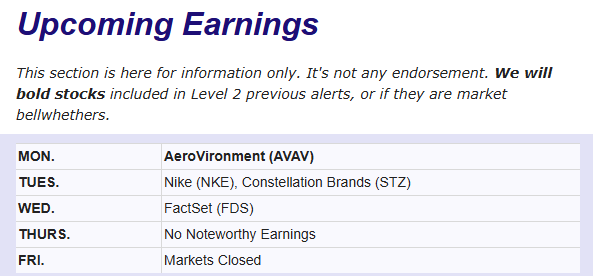
Looking ahead, investors will focus on the June jobs report, JOLTS job openings, the ADP employment report, the ISM Manufacturing PMI, and the ECB's annual Sintra Forum for further clues on the outlook for growth and interest rates. As the second half of this midterm election year begins, history suggests market leadership may continue broadening, making sector selection increasingly important in the months ahead.
AI Demand Is Still Accelerating
One of the biggest questions hanging over markets this quarter was whether the unprecedented wave of AI spending was finally beginning to slow. Micron largely put that debate to rest.
The memory chip manufacturer delivered one of the strongest earnings reports in semiconductor history, reporting revenue of $41.5 billion versus expectations of roughly $35.7 billion while raising next quarter's guidance to as much as $51 billion. Even more importantly, the company announced that it has already signed 16 multi-year Strategic Customer Agreements running through 2030, representing approximately $100 billion in contracted revenue with another $22 billion in customer deposits. These agreements effectively guarantee supply years in advance, highlighting just how severe the shortage of AI memory has become.
Perhaps the most important takeaway wasn't simply the earnings beat—it was what it revealed about the broader AI economy. Customers are no longer purchasing chips quarter-to-quarter. They are committing billions of dollars years in advance because they expect AI infrastructure demand to remain elevated for the foreseeable future.
Yet despite one of the strongest earnings reports the industry has ever seen, technology stocks broadly sold off following the release. That tells us investors have begun asking a different question: not whether AI spending will continue, but which companies will ultimately generate the greatest returns from that spending.

Wall Street Quietly Rotated Out Of Technology
While Micron confirmed AI demand remains exceptionally strong, institutional investors spent the week reducing exposure to many of the companies that have led the market higher over the past two years.
According to Goldman Sachs' Prime Brokerage data, hedge funds sold technology stocks at the fastest pace in more than a decade, with semiconductor equipment, software, communications equipment, and the Magnificent Seven all seeing meaningful outflows. Technology funds also experienced their largest withdrawals in months, while capital rotated toward more defensive areas including consumer staples, energy, real estate, and select housing-related companies.
Importantly, this does not necessarily signal that investors have become bearish on AI. Instead, it suggests the market is becoming far more selective.

For nearly two years, almost every company connected to artificial intelligence benefited from the same narrative. Today, investors are beginning to distinguish between the companies collecting the checks and those writing them. Chip manufacturers, memory suppliers, networking companies, and other infrastructure providers continue benefiting from extraordinary demand and growing pricing power, while the hyperscalers investing hundreds of billions of dollars into AI infrastructure are facing increasing scrutiny over how quickly those investments will translate into meaningful shareholder returns.
Rather than abandoning technology altogether, Wall Street appears to be entering the next phase of the AI trade. Investors are no longer rewarding every company tied to artificial intelligence equally—they are increasingly favoring the businesses supplying the AI buildout while demanding clearer evidence that the companies funding it can generate attractive returns on those investments.

The Economy Continues To Defy Expectations
The week's economic data painted a surprisingly resilient picture of the U.S. economy despite continued inflationary pressures.
Consumer spending accelerated in May even as the Fed's preferred inflation measure climbed to its highest level in roughly three years.

Personal incomes also increased, while the University of Michigan'sconsumer sentiment survey improved from its recent lows as gasoline prices declined following the easing of tensions in the Middle East. Inflation expectations also moved lower, suggesting consumers believe the recent spike in prices may prove temporary rather than the beginning of another prolonged inflation cycle.
The picture, however, remains far from perfect.
Core inflation continues running well above the Federal Reserve's target, while the personal savings rate remains near multi-year lows as households continue drawing down savings to support spending. At the same time, consumer borrowing is accelerating.

Total consumer credit jumpedby $25 billion in March to a record $5.14 trillion, marking the largest monthly increase in a year. Credit card balances rose by $10 billion, the biggest monthly increase since early 2024, while auto and student loans climbed another $15 billion, pushing non-revolving credit to an all-time high of $3.80 trillion. Since the pandemic, total consumer credit has increased by more than $1 trillion, highlighting that many households are increasingly relying on debt to maintain spending as prices remain elevated.
Taken together, the data reinforces the idea that the U.S. economy remains stronger than many expected earlier this year. Consumers continue spending, businesses continue investing, and confidence is improving as energy prices retreat. However, that resilience is increasingly being supported by higher borrowing and lower savings rather than stronger purchasing power alone. Combined with persistent inflation, it leaves the Federal Reserve under pressure to keep monetary policy restrictive for longer, even as markets continue hoping for eventual rate cuts.

History Suggests A Rotation Could Continue
With the second half of the year about to begin, history offers an interesting perspective on where market leadership could shift next.
Since 2006, Health Care has been the best-performing sector during the second half of every U.S. midterm election year, posting an average gain of 8.5% while delivering a positive return 100% of the time. Industrials, Financials, Materials, Consumer Staples, and Utilities have also historically performed well during this period.
Perhaps the biggest surprise is Technology. Despite dominating market performance over much of the past decade, the sector ranks only eighth during the back half of midterm election years, producing an average gain of roughly 6% with a 60% success rate. Real Estate has historically been the weakest performer, posting negative returns in every observed midterm period.
History is never a guarantee of future performance, particularly during a market being reshaped by artificial intelligence. However, it does provide a useful framework for understanding the type of rotation institutional investors often pursue as election uncertainty increases.
That possibility appears increasingly relevant today. While AI demand remains exceptionally strong, recent hedge fund positioning suggests investors are beginning to broaden exposure beyond the handful of companies that have driven the market for the past two years. Health Care has already begun showing relative strength, with the Health Care Select Sector SPDR ETF (XLV) gaining roughly 9% over the past week. If that rotation continues, sectors with historically strong midterm performance—particularly Health Care, Industrials, and Financials—could become increasingly attractive areas to watch during the second half of 2026.

Last's Weeks Sector Winners & Losers
Leadership shifted dramatically this week as investors rotated away from many of the market's biggest AI winners and into more defensive sectors. Health Care (XLV +7.32%) led the market by a wide margin, followed by Utilities (XLU +3.22%), Real Estate (XLRE +3.15%), and Consumer Staples (XLP +1.69%) as investors sought stability amid rising volatility in technology.
The sharpest weakness came from the sectors that had driven the market higher for much of the past two years. Information Technology (XLK -5.40%) posted the largest decline despite Micron's blowout earnings, while Communication Services (XLC -2.99%) and Consumer Discretionary (XLY -2.38%) also lagged as investors reduced exposure to the hyperscalers and other AI heavyweights. Materials (XLB -0.41%) finished modestly lower, while Financials (XLF) were essentially unchanged.
The rotation reflects a notable shift in investor positioning. Rather than abandoning artificial intelligence, investors appear to be broadening exposure beyond the market's biggest winners while favoring sectors that have historically outperformed during periods of elevated uncertainty and the second half of U.S. midterm election years.

Upcoming Events This Week
The week ahead will be focused on labor market data and global central bank commentary as investors continue assessing the outlook for economic growth and interest rates.
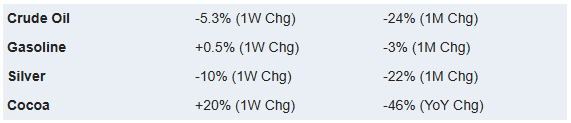
In the U.S., the June jobs report will headline the week alongside JOLTS job openings, the ADP employment report, Challenger job cuts, the ISM Manufacturing PMI, factory orders, and Case-Shiller home prices. Markets will also continue monitoring traffic through the Strait of Hormuz after shipping flows rebounded, helping push energy prices lower.
Abroad, attention will turn to the ECB's annual Sintra Forum, where global central bankers are expected to discuss the outlook for inflation and monetary policy. Investors will also watch inflation data from the Eurozone, Japan's Tankan business survey, and China's official and Caixin manufacturing PMIs for further clues on global economic momentum.

Company News
LevelFields AI Stock Alerts Last Week
BNC (CEA Industries) +18.0% — Aggressive Share Buyback
Shares of BNC surged roughly 18% after the company announced it had repurchased 1.43 million shares for $3.8 million under its authorized share repurchase program following fiscal year-end. The buyback comes just months after the company's transformation into the world's largest publicly traded corporate treasury focused on BNB, signaling management's confidence that the stock remains undervalued despite its recent appreciation.
Share repurchases reduce the number of shares outstanding, increasing each remaining shareholder's ownership stake and often boosting earnings per share over time. For investors, the announcement also signals that management believes buying its own stock currently offers a better return than deploying that capital elsewhere.
The move reflects growing confidence in the company's long-term strategy while reinforcing management's commitment to returning capital to shareholders. As BNC continues expanding its BNB treasury, opportunistic share repurchases could provide additional support for the stock during periods of market volatility.
Definium Therapeutics (DFTX) +65% (1W) — Phase 3 Breakthrough
Definium Therapeutics surged after reporting positive Phase 3 results for its lead psychedelic therapy, DT120, for major depressive disorder. The trial met its primary endpoint, with patients experiencing statistically significant improvement as early as one week after treatment. The company also raised $700 million to support regulatory submissions and commercialization, marking its transition from a clinical-stage biotech to a potential commercial-stage company.
Level 2 members were alerted to DFTX on April 1st at $20.50 and it is now trading at $45.
Our thesis centered on DT120's potential to fundamentally change how depression and anxiety are treated. Unlike traditional antidepressants that require daily dosing and often take weeks to become effective, DT120 demonstrated the ability to produce rapid, durable improvements from a single dose. With strong Phase 2 data already published, multiple Phase 3 catalysts scheduled throughout 2026, and a massive addressable market affecting more than 10% of the U.S. population, we believed the market was significantly underestimating the probability of clinical success.
.png)
How to use LevelFields for Options Trading
Tracking Stocks Without Spreadsheets
The Truth About Dividend Stocks
What's LevelFields' Premium Membership Provide?
This is not financial advice. All information represent opinions only for informational purposes. Given the vast number of stocks we cover in these reports, assume staff covering stocks have positions in stocks discussed.
Have feedback or a request for specific data? Drop us a note at support@levelfields.ai