



L2 Weekly Stock Market News Analysis
July 12th, 2026

TLDR:
The biggest story this week may not be a single earnings report or economic release, but the collision of all three major market drivers at once: inflation, the Federal Reserve, and the start of earnings season. Fed Chair Kevin Warsh will testify before Congress just as June CPI and PPI are released, giving investors one of the clearest looks yet at how he plans to respond to sticky inflation, softer growth signals, and a still-volatile energy backdrop.
That matters because Warsh’s first testimony as chair comes only weeks after the Fed signaled it was still open to another rate hike if inflation remains elevated. Markets will be listening closely for any clues on whether higher oil prices, firmer inflation expectations, and recent macro data have strengthened or weakened the case for tighter policy. In other words, this week could do a lot to shape expectations for the Fed’s next move.
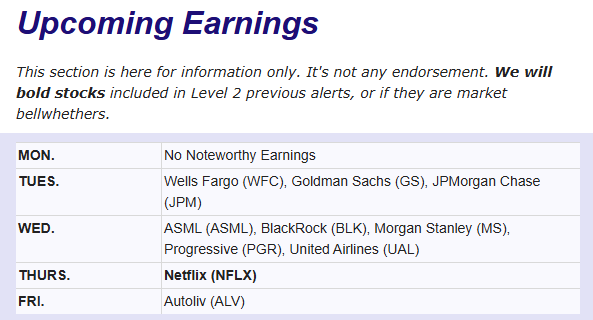
At the same time, earnings season begins in force. JPMorgan, Bank of America, Wells Fargo, Goldman Sachs, and Citigroup will give investors an early read on loan demand, credit quality, and the health of the consumer. Later in the week, Morgan Stanley, Johnson & Johnson, ASML, Taiwan Semiconductor, Netflix, UnitedHealth, and GE Aerospace should provide important signals on everything from investment banking and medical costs to AI chip demand, streaming, and industrial activity. Retail sales will add one more test of whether the consumer is still holding up.
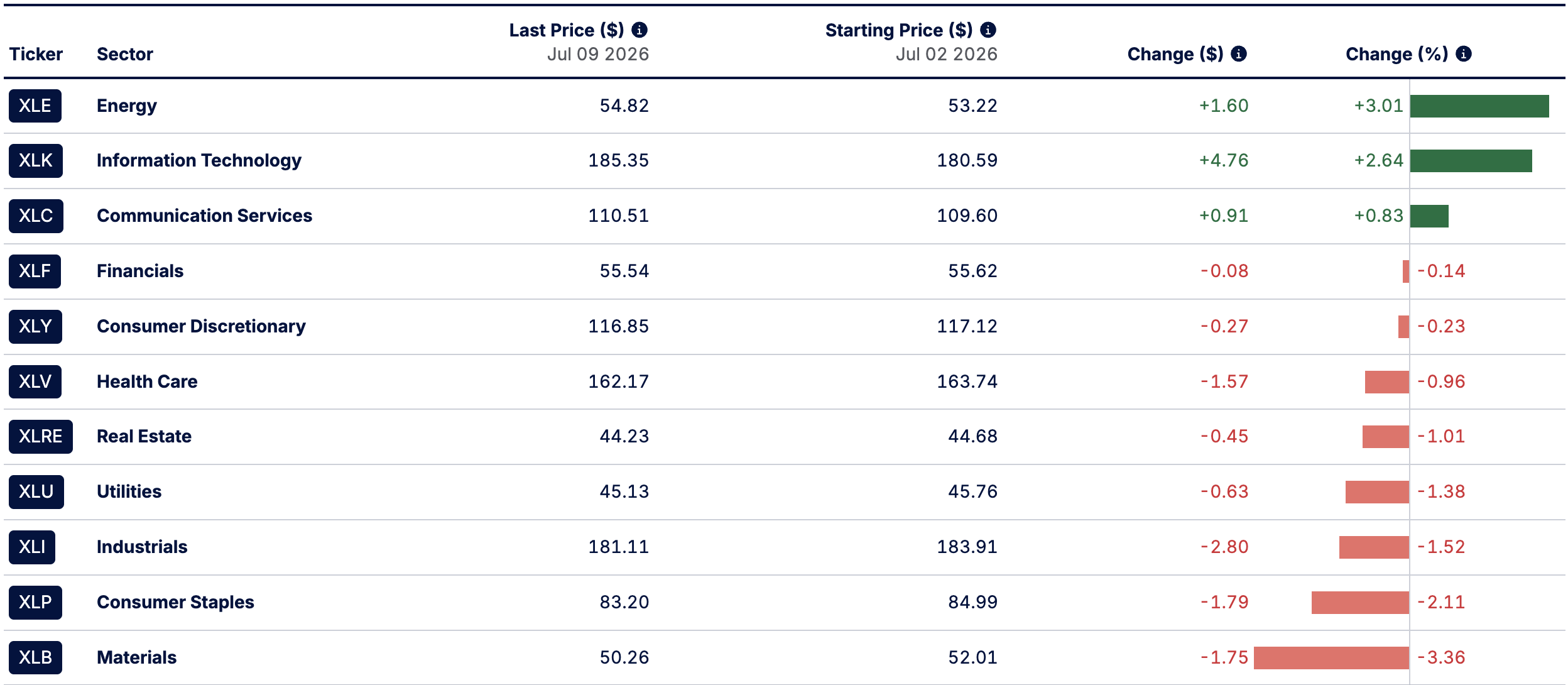
Sector performance last week showed how selective the market remains. Energy (+3.01%) led, followed by Information Technology (+2.64%) and Communication Services (+0.83%), while most of the rest of the market lagged. Materials (-3.36%), Consumer Staples (-2.11%), Industrials (-1.52%), Utilities (-1.38%), Real Estate (-1.01%), and Health Care (-0.96%) all finished lower. That kind of narrow leadership suggests investors are still crowding into a few high-conviction themes rather than embracing a broad-based rally. The question this week is whether Warsh, inflation data, and earnings reinforce that narrow leadership — or finally start to broaden it.
The Semis And Memory Trade Is Unwinding
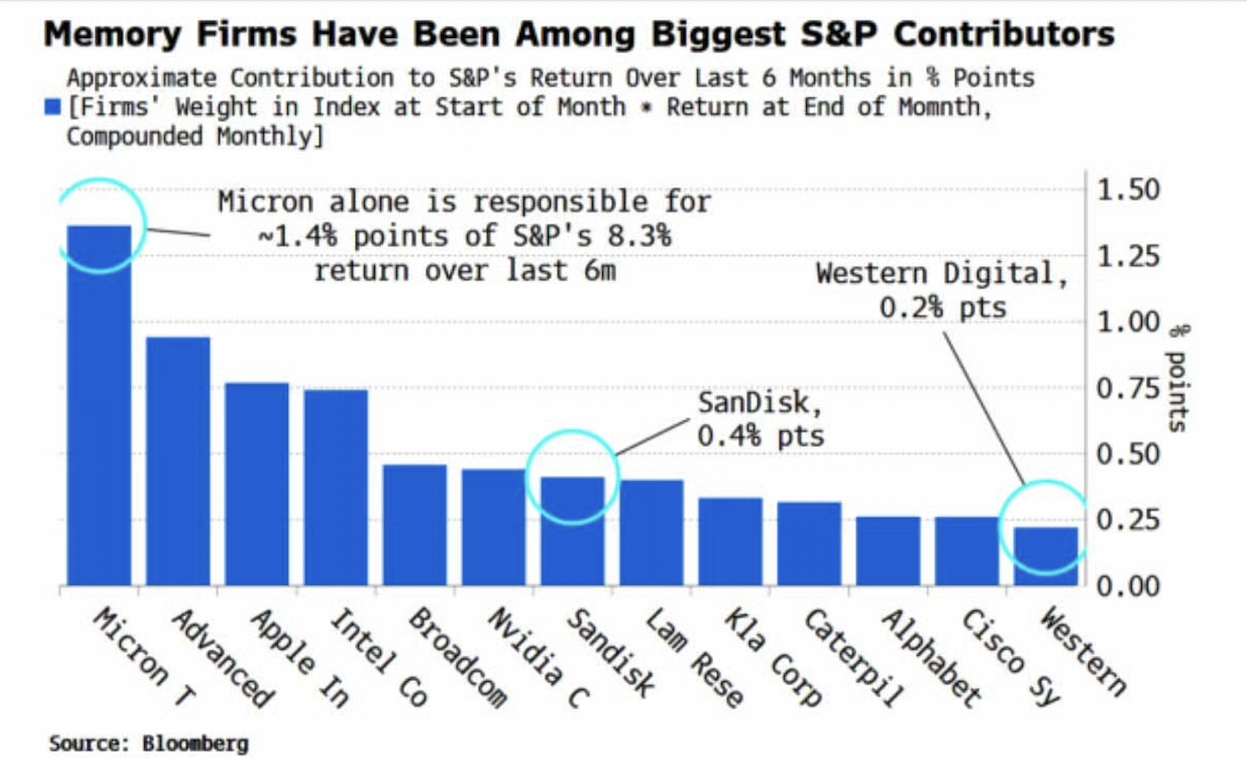
For much of the past several months, the easiest way to make money in artificial intelligence was to own the clearest beneficiaries of the buildout. Memory makers, semiconductor equipment companies, AI networking names, and other hardware suppliers all surged as investors crowded into the businesses collecting the checks from hyperscalers racing to build more capacity.
This week, that trade continued to crack.
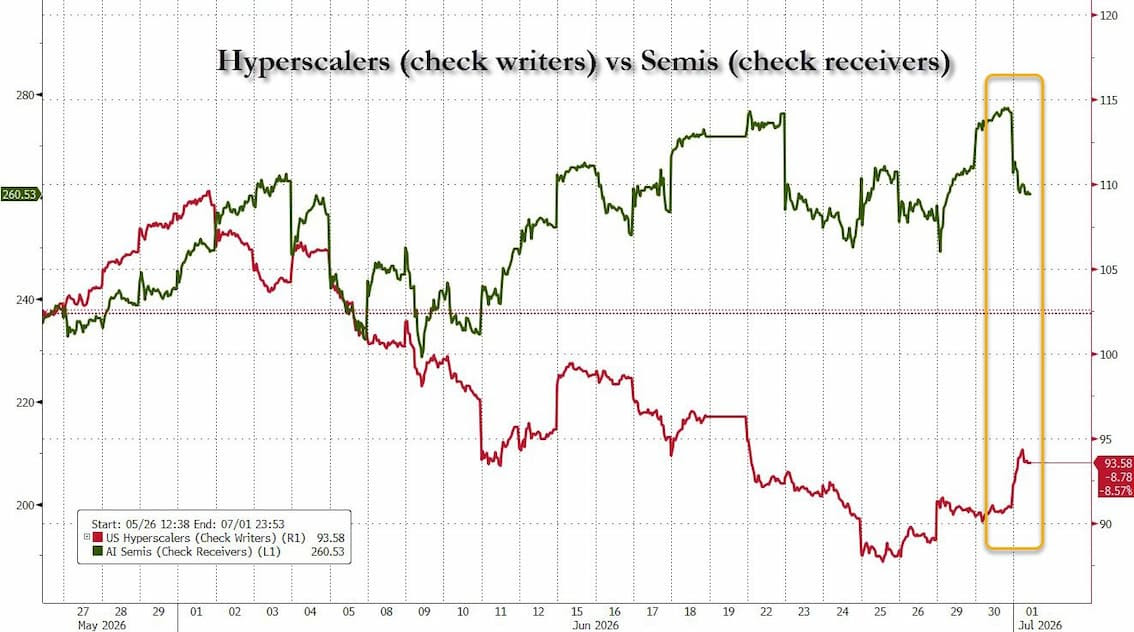
The selloff does not mean AI demand disappeared. It means one of the market’s most crowded trades finally started to unwind after a historic run. The sharp divergence between semis and hyperscalers had become increasingly difficult to sustain, especially because semiconductor demand ultimately depends on hyperscaler spending. That is why the recent weakness looks less like the end of the AI capex cycle and more like the next rotation within it.
That distinction matters. Demand across the AI infrastructure complex still appears strong, but expectations, positioning, and valuations in the most crowded parts of the market had become too stretched. Memory in particular had started to behave less like a normal growth industry and more like a momentum-driven commodity trade, where even a small slowdown in earnings revisions or a modest shift in positioning could trigger a sharp unwind. This may simply be the latest reset in an AI cycle that has already gone through several similar corrections.
At the same time, the warning signs had been building. Market dispersion within technology had become extreme, a small group of winners had gone nearly parabolic, and the setup was beginning to draw more comparisons to prior speculative peaks. Even if the fundamentals are better today than they were in past bubbles, the price action had started to look unstable.
The reset in semis and memory may ultimately prove healthy if it forces leadership to broaden. Market leadership has been extraordinarily narrow for much of the year, and when positioning becomes that concentrated, even good news can stop pushing prices higher. That appears to be what the market is testing now.
For investors, the trade ideas are becoming more nuanced. Micron, Broadcom, and Nvidia still look like some of the highest-quality AI infrastructure names on pullbacks because they remain closest to actual spend. But the cleaner tactical setup may be to avoid the most parabolic memory beta and start shifting toward more diversified AI exposure or the next leg of the cycle. A more tactical framework may now be less exposure to crowded memory trades and more exposure to hyperscalers and other broadening areas of the market.
Tailwind One: Hyperscalers May Be Next
That may sound counterintuitive at first. For months, the market punished hyperscalers for rising capital expenditures, uncertain returns on investment, and the sheer scale of spending required to stay competitive in AI. While semiconductor and memory stocks kept climbing, many of the companies funding the buildout struggled to keep pace because investors questioned how quickly those hundreds of billions of dollars in capex would translate into meaningful free cash flow and earnings.
That divergence now looks increasingly unsustainable. Semiconductor leaders ultimately depend on hyperscaler demand, and once the market starts questioning the peak rate of change in hardware earnings revisions, attention naturally shifts back to the companies actually controlling the customer relationship, the cloud layer, the application layer, and the long-term monetization opportunity.
Importantly, the hyperscaler story has changed. Rising capex was once treated as simple proof that the AI thesis remained intact. More recently, investors have started asking harder questions about valuation, earnings quality, and whether direct exposure to model providers could become more attractive than owning mega-cap proxies. That skepticism has now gone far enough that hyperscalers are starting to look more interesting again, especially relative to semis.
That creates a more actionable setup. Alphabet looks particularly attractive because it combines search, cloud, custom silicon, and improving backlog visibility. Microsoft remains one of the cleanest enterprise AI monetization stories through Azure and Copilot. Amazon offers exposure to AWS acceleration and one of the broadest capacity buildouts in the market. Meta is probably the highest-beta version of the trade, especially if the market begins to reward its ability to monetize excess compute, improve advertising efficiency, and eventually participate more directly in the application layer.
The cleaner way to express this theme is not to treat hyperscalers as defensive. It is to treat them as the next rotation candidate within AI. For investors looking for actionable ideas, Alphabet and Microsoft look like the highest-quality core positions, Amazon offers broad infrastructure and cloud leverage, and Meta looks like the tactical catch-up trade if sentiment continues improving. A simple relative-value framework also makes sense here: hyperscalers over semis for the near term if the market continues broadening.

Tailwind Two: Robotics Is Where AI Starts Generating Physical Work
The next major question for markets is no longer just who builds artificial intelligence. It is where artificial intelligence actually gets deployed.
That is why robotics matters.
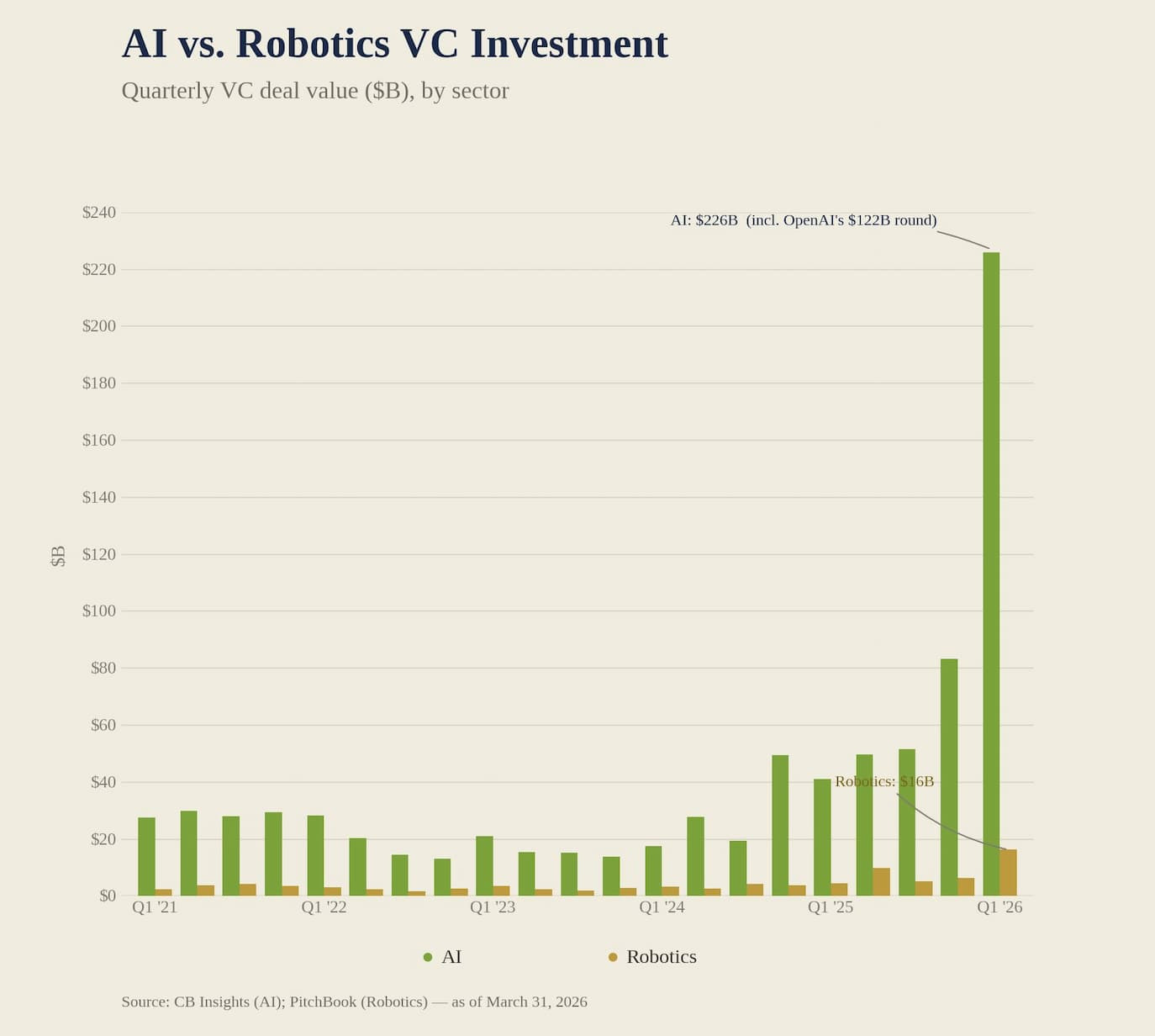
For nearly three years, the AI trade has been dominated by digital infrastructure: GPUs, memory, networking, data centers, and power. Robotics represents the next phase of that cycle because it brings AI out of the data center and into the physical economy. Instead of generating text, code, and images, AI begins generating labor, productivity, and real-world economic output.
The timing is becoming more compelling. Advances in vision-language-action models, simulation, teleoperation, onboard computing, batteries, and sensors are making robotics far more practical than it was even a few years ago. Just as importantly, companies no longer need humanoids to replace entire workforces in order for the economics to work. They only need robots capable of handling repetitive, labor-intensive, or safety-sensitive tasks well enough to generate a measurable return.
A good example came this week from 1X, which unveiled new tendon-driven hands for its Neo robot with 25 degrees of freedom, close to the range of a human hand. That may sound like a small hardware update, but hand dexterity has long been one of the biggest bottlenecks in humanoid robotics. The broader takeaway is that robots are getting better at manipulating real-world objects, which brings the industry one step closer to useful deployment in homes, warehouses, and workplaces.

That is why the earliest commercial deployments are likely to happen in warehouses, logistics centers, factories, semiconductor facilities, and certain health care support environments rather than in consumer homes. These are structured environments, labor is expensive, repetitive workflows are common, and the return on automation is easier to quantify. In other words, robotics is becoming investable for the same reason enterprise AI is becoming investable: the ROI is increasingly measurable.
The most important investing insight is that the biggest winners may not be the humanoid developers themselves. Many of the most compelling public opportunities sit one or two layers down the stack. Ambarella, Ouster, and Hesai offer exposure to perception. Rockwell Automation, Regal Rexnord, ABB, and Parker-Hannifin offer exposure to motors, motion control, and industrial systems. MP Materials, Energy Fuels, and Lynas offer exposure to rare earth magnets and strategic supply constraints. Symbotic, Amazon, GXO, and FedEx offer exposure to deployment environments where real-world adoption may happen first.
For investors looking for more actionable ways to play the theme, there are really three buckets. The first is the higher-quality industrial bucket: Rockwell, Regal Rexnord, ABB, and Parker-Hannifin. The second is the deployment bucket: Symbotic, Amazon, and GXO. The third is the bottleneck bucket: MP Materials and select sensor or perception names such as Ambarella and Ouster. If robotics becomes the next commercialization wave, the most durable returns may come from the suppliers every robot needs rather than from trying to predict which humanoid platform wins.
Tailwind Three: Iran Is Forcing Markets To Reprice Energy Risk
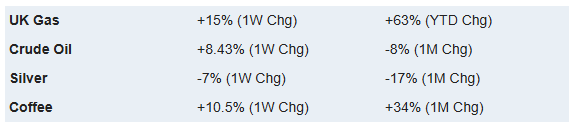
Just a few weeks ago, markets were treating the reopening of the Strait of Hormuz as a macro relief valve. Oil prices fell, inflation concerns eased, and investors began assuming that one of the biggest geopolitical risks facing the global economy had at least temporarily moved into the background.
This week challenged that assumption.
Attacks on commercial shipping, renewed U.S. strikes, Iranian retaliation, and the revocation of the Iran oil waiver all forced markets to reconsider how stable that normalization really was. The issue is not simply whether the Strait is formally open or closed. The issue is whether shipowners, insurers, commodity traders, and policymakers still believe conditions are stable enough to treat flows through Hormuz as fully normalized.
That distinction matters because oil is not just an energy story. It is an inflation story, a rates story, and increasingly a market leadership story. If crude prices remain firm or move higher as the geopolitical risk premium returns, that can feed back into inflation expectations, transportation costs, consumer sentiment, and Treasury yields. That, in turn, affects everything from Fed expectations to sector rotation.
The market may have been too quick to price de-escalation. Even if the worst-case outcome is avoided, the confidence required for smooth shipping normalization appears weaker than many investors assumed. That likely means a higher floor for crude, a more fragile inflation backdrop, and a macro environment where energy, commodities, and defense remain relevant hedges.
The most actionable trade ideas here are less about chasing a worst-case oil spike and more about positioning for a stickier risk premium. Integrated energy names such as Chevron and Exxon remain attractive if the market continues repricing crude higher. Defense names such as RTX, L3Harris, Kratos, and nLIGHT also fit the broader theme of persistent geopolitical tension and elevated defense demand. For investors looking for a broader hedge rather than a single-stock view, energy and defense exposure both make sense as portfolio offsets if inflation risk begins to reaccelerate.

Last's Weeks Sector Winners & Losers
Sector leadership broadened last week as investors continued rotating beyond the narrow group of AI infrastructure winners that dominated the first half of the year. Health Care (XLV +4.04%) led the market for a second consecutive week, followed by Communication Services (XLC +3.00%), Consumer Discretionary (XLY +2.62%), Financials (XLF +1.97%), and Industrials (XLI +1.75%). Information Technology (XLK +1.40%) also finished higher, suggesting investors remain constructive on AI despite broadening participation across the market.
The weakest sectors were Utilities (XLU -1.69%), Energy (XLE -1.42%), Consumer Staples (XLP -1.35%), Real Estate (XLRE -0.74%), and Materials (XLB -0.27%), as investors rotated out of many of the defensive areas that had outperformed during the recent bout of market uncertainty.
Upcoming Events This Week
The week ahead will be driven by three themes: Middle East developments, earnings season, and the Fed. Investors will continue monitoring renewed U.S.-Iran hostilities and the risk of further disruption to oil supplies, while earnings season begins with major banks including JPMorgan, Bank of America, Citigroup, Goldman Sachs, and Wells Fargo, followed later in the week by Johnson & Johnson, Morgan Stanley, UnitedHealth, Intuitive Surgical, and Netflix.
On the macro side, Fed Chair Warsh’s congressional testimony will be closely watched for any signals on rates and possible Fed reforms. Key U.S. data releases include June CPI, retail sales, industrial production, Michigan consumer sentiment, and housing data. Overseas, investors will watch the Bank of Canada decision, the U.K.’s May GDP report, and a heavy slate of Chinese data including Q2 GDP, trade, industrial production, retail sales, unemployment, and house prices.

Company News
LevelFields AI Top Stock Alert Last Week
EquipmentShare (EQPT) +16.6% (1D) — Raised Guidance and Authorized $500 Million Buyback
Shares of EquipmentShare jumped roughly 16.6% after the companyraisedits full-year 2026 outlook and authorized a new $500 million share repurchase program. Management said the stronger outlook was driven by continued customer demand, sustained fleet utilization, disciplined execution, and better-than-expected performance through the first half of the year. The company also raised the midpoint of its full-year rental segment revenue growth outlook to 33% from 29%, while increasing expectations for total revenue, EBITDA, and fleet growth.
The buyback is notable because it signals confidence not just in near-term demand, but in the company’s longer-term growth strategy. EquipmentShare said it expects to end the second quarter with roughly $2.6 billion of liquidity, giving it flexibility to repurchase shares while still investing in fleet, technology, and expansion. Management remains focused on scaling toward 700 rental locations and $20 billion of equipment under management by 2030, suggesting the company sees both current momentum and significant runway ahead.
Golden Dome Is Bringing Laser Weapons Closer To Reality
An interesting defense theme is also starting to take shape. If this week's escalation showed how serious drone and cruise missile threats have become, the Pentagon's new Golden Dome effort shows where part of the next wave of defense spending could go.
nLight (+30% 1W) was recently selected alongside Lockheed Martin to help build laser weapon systems designed to shoot down cruise missiles. That matters because laser weapons have long been viewed as promising, but still years away from real use. This is one of the clearest signs yet that the U.S. military is trying to move that technology closer to actual deployment.
The investment case is straightforward. Traditional missile interceptors are expensive, and conflicts can burn through them quickly. Laser weapons could eventually offer a cheaper way to stop repeated attacks from drones and missiles. For investors, nLight is one of the purest public ways to gain exposure to that theme, while Lockheed Martin offers a larger and more diversified way to participate. If Golden Dome continues gaining funding and political support, directed energy could become a much bigger defense story over the next several years.
Penguin Solutions (+25% 1W) Just Delivered More Evidence The AI Buildout Is Still Real
Most investors have probably never heard of Penguin Solutions. That is part of what makes the quarter so interesting.
Penguin sits closer to the physical layer of the AI buildout, selling memory, compute systems, infrastructure software, and deployment services. This week, the company reported record quarterly revenue of $479 million, up 48% year over year, while non-GAAP EPS rose 79% to $0.84. Management also raised full-year guidance again, now expecting roughly 22% sales growth and $2.60 in non-GAAP EPS.
The most important takeaway was not just the beat. It was what management said about demand. CEO Kash Shaikh said Integrated Memory sales more than doubled from a year ago and that Penguin is seeing “very strong AI-driven customer demand” across both memory and AI infrastructure. That matters because the bearish AI narrative says demand is cracking. Penguin’s quarter says demand is still moving through the infrastructure stack.
For investors, Penguin remains one of the more underfollowed ways to play the AI buildout beyond the obvious mega-cap names. If AI spending is still real, smaller infrastructure companies like PENG could continue catching up.
.png)
How to use LevelFields for Options Trading
Tracking Stocks Without Spreadsheets
The Truth About Dividend Stocks
What's LevelFields' Premium Membership Provide?
This is not financial advice. All information represent opinions only for informational purposes. Given the vast number of stocks we cover in these reports, assume staff covering stocks have positions in stocks discussed.
Have feedback or a request for specific data? Drop us a note at support@levelfields.ai