


.png)
L2 Weekly Stock Market News Analysis
July 19th, 2026

TLDR:
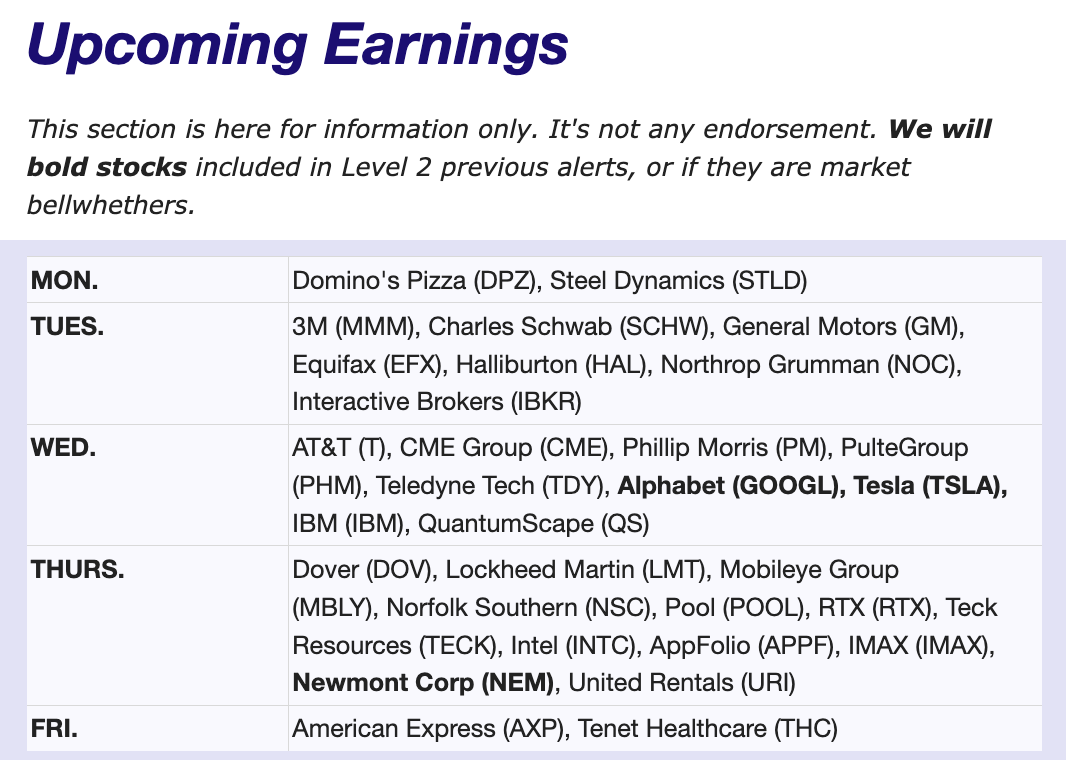
The biggest story this week is the pressure building around the AI trade. Markets are coming off a sharp sell-off in semiconductors, renewed war risk in the Middle East, and a clear rotation out of crowded growth names. Now the next test arrives with some of the most important earnings of the week: Alphabet (GOOGL), Tesla (TSLA), IBM (IBM), and Intel (INTC). Together, they should give investors a read on everything from AI spending and cloud demand to chip weakness, enterprise software, and broader tech sentiment.
That matters because the recent pullback has turned this week into a real check-in on whether Big Tech can still justify the massive spending behind the AI buildout. Investors are no longer rewarding capex alone. They want measurable returns. With semiconductor stocks under pressure and more than $3 trillion erased from global chip names since late June, earnings from both the buyers of AI infrastructure and the sellers into that trade will help determine whether this is just a rotation or the start of a broader reset.
The macro calendar is lighter, which means earnings and geopolitics may matter even more. A round of S&P Global business activity readings will still provide a broad read on the economy, but the bigger focus is likely to remain on tech leadership, oil, and whether the recent shift out of semis continues.
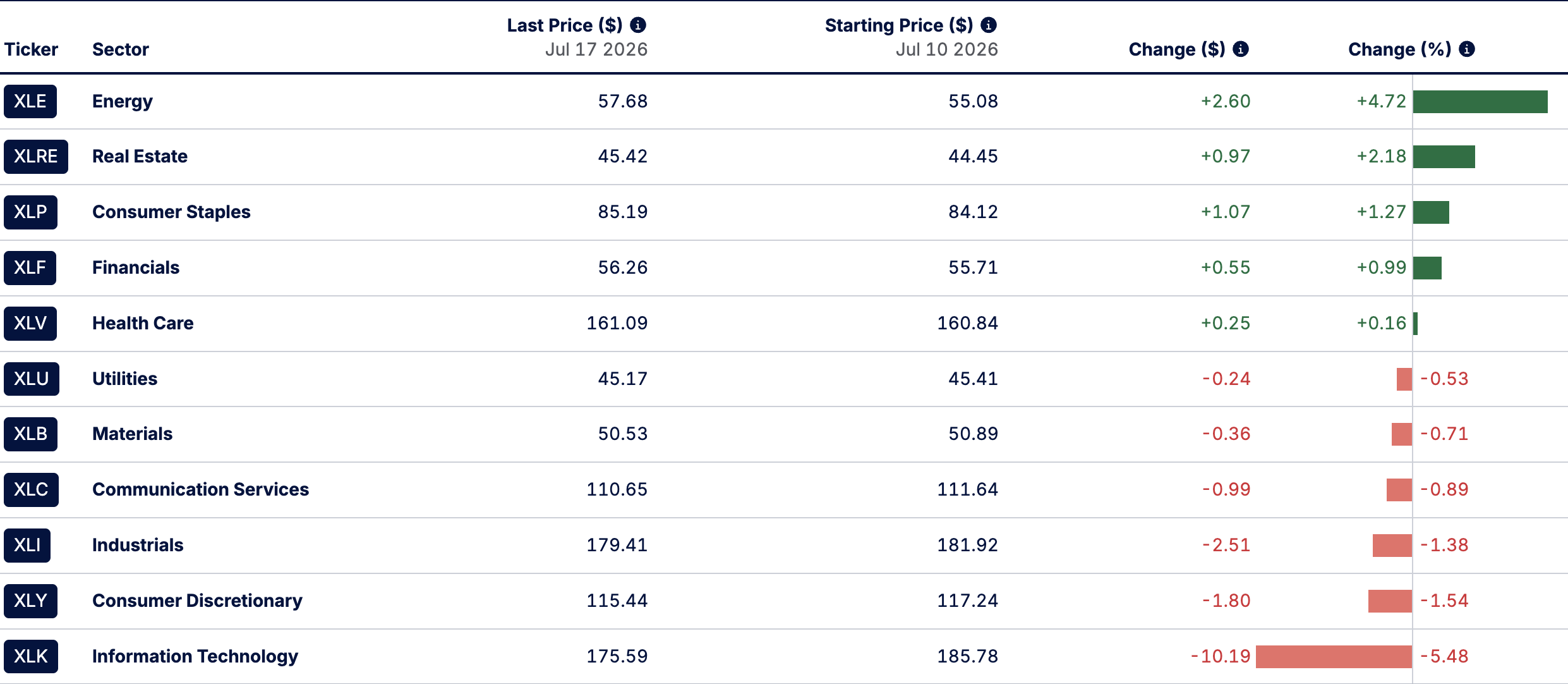
Sector performance last week showed that this was a rotation, not a full market collapse. Energy (+4.72%) led by a wide margin, followed by Real Estate (+2.18%), Consumer Staples (+1.27%), Financials (+0.99%), and Health Care (+0.16%). On the other side, Information Technology (-5.48%) was hit hardest, followed by Consumer Discretionary (-1.54%), Industrials (-1.38%), and Communication Services (-0.89%). In other words, investors were not selling everything. They were selling the most crowded AI and growth exposure while moving into energy, defensives, and areas that tend to hold up better when oil rises and volatility increases.
The question this week is whether Big Tech earnings can stabilize that rotation — or confirm that the market wants something different from the AI trade going forward.
AI’s Stress Test
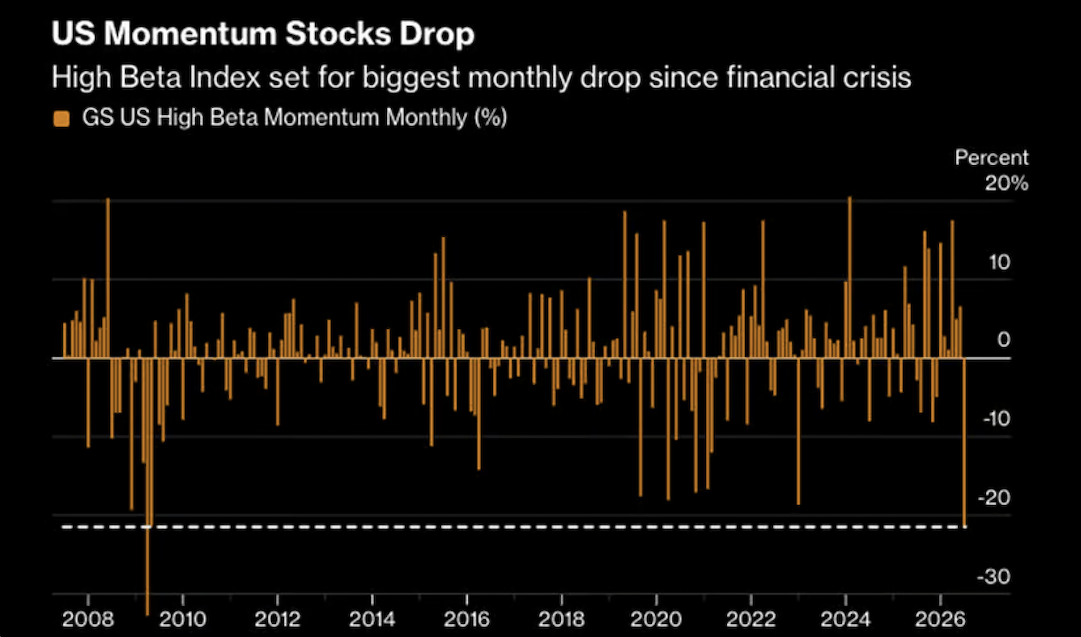
Momentum has broken hard, hedge funds have been de-grossing technology, and semiconductor stocks have gone from market leaders to one of the weakest parts of the tape. The SOX is now in a bear market after one of the fastest bouts of underperformance versus the S&P 500 in decades, while tech investors have cut exposure aggressively over the past six weeks. Even so, this still looks more like a violent reset than a clean fundamental break. Positioning has been washed out quickly, volatility has exploded, and a growing number of high-quality AI names are now moving into oversold territory.
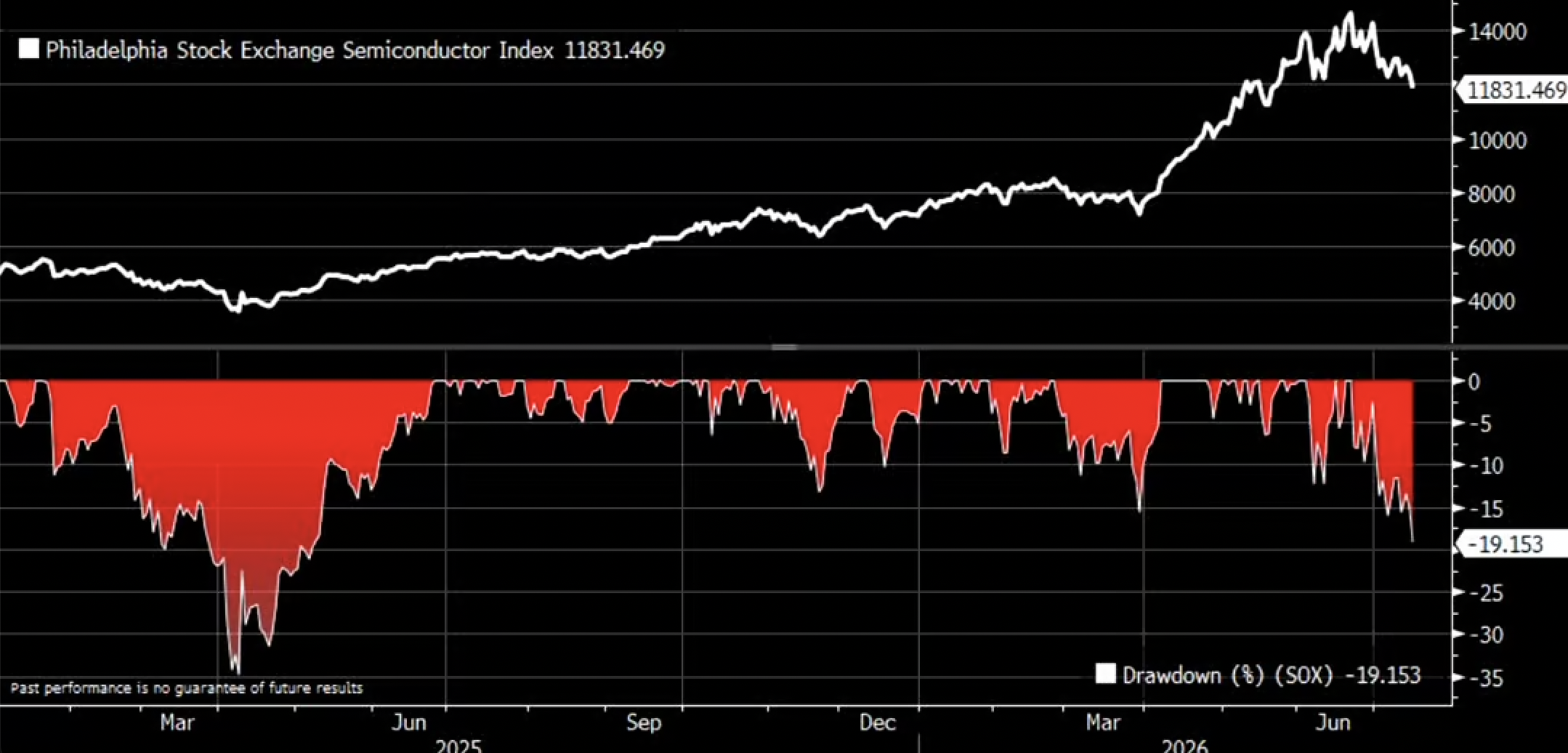
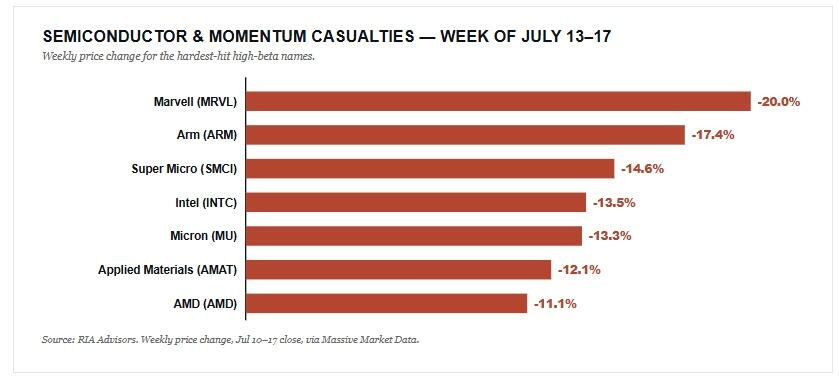
That is why the trade ideas here need to be selective. The higher-quality way to buy this drawdown is still through the core AI infrastructure names closest to real spend, such as Nvidia (NVDA), Broadcom (AVGO), and Micron (MU), rather than lower-quality momentum beta. For investors looking for more tactical setups, the oversold list is getting interesting, especially names such as Synopsys (SNPS), Cadence (CDNS), Jabil (JBL), GlobalFoundries (GFS), and MACOM-like second-order semis such as MTSI and NVTS. The key is to treat this as a reset in leadership and positioning, not a signal to blindly chase every AI stock that is down 20%. The best risk/reward is likely in high-quality semis, AI hardware, and select design/software names where the selloff has outrun any actual change in demand.
It Is A Rotation, Not A Collapse
The most important thing to understand about this selloff is that money is not leaving the market all at once. It is rotating out of the most crowded corner. The equal-weight S&P 500 held up far better than the cap-weighted index, defensive and cyclical value groups finished green, and leadership quietly shifted toward energy, real estate, staples, financials, and security software. At the same time, mega-cap AI leaders such as Microsoft and Amazon held up far better than the speculative fringe. That is not what broad liquidation looks like. It is what a leadership change looks like.
That distinction matters for trade ideas. If this is a rotation rather than a collapse, investors do not need to stay trapped in the same crowded hardware names. A cleaner approach may be to look at companies benefiting from AI adoption further downstream, especially software and platform businesses that are less tied to semiconductor volatility. Palo Alto Networks (PANW) and CrowdStrike (CRWD) stand out as ways to stay exposed to enterprise AI demand without relying on the same chip bottlenecks. Microsoft (MSFT) and Amazon (AMZN) also look attractive because they sit closer to the customer, the cloud, and the application layer. For investors looking beyond technology, large banks such as JPMorgan (JPM) and energy names such as Exxon (XOM) fit the parts of the market that have been holding up best as leadership broadens.
Cheap AI Is Becoming A Bigger Threat
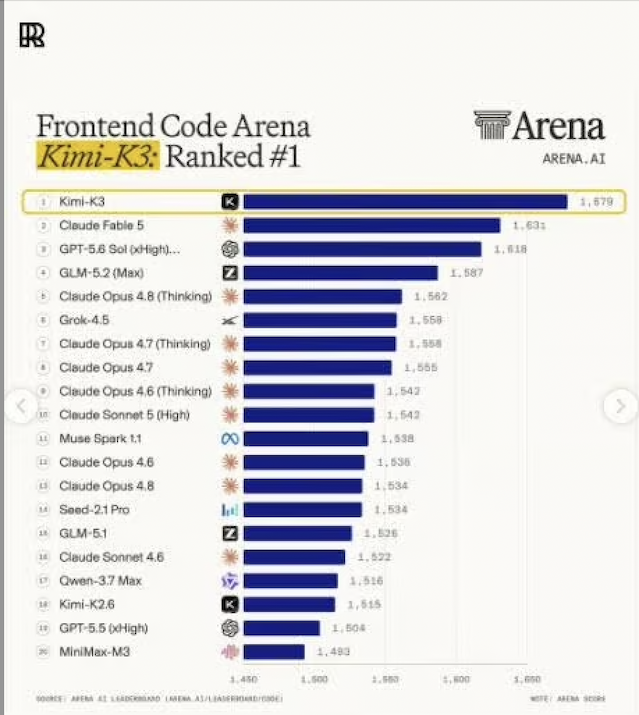
The bigger risk now is that AI may be getting cheaper faster than the market expected. For the past two years, investors rewarded the companies selling the tools needed to build AI: chips, memory, networking, and data centers. Now that may be starting to change. Moonshot’s new Kimi K3model is a good example. It reportedly jumped to the top of a major coding leaderboard, can handle very large amounts of information at once, costs much less than some leading U.S. models, and is expected to become openly available later this month. In broader text rankings, it also finished ahead of Anthropic’s Opus 4.8 while costing about 40% less, which is exactly why it matters. It does not have to be the best model in the world to change the market. It only has to be good enough and cheap enough to make customers think twice about paying much more elsewhere.
That matters because the AI trade has been built on the idea that the companies spending the most money would also keep the strongest pricing power. If rivals can offer similar results for far less, that puts pressure on margins and makes all that spending harder to justify. In plain English: if the same AI job can be done for a lot less money, some of today’s winners may not earn as much as investors expect.
There is also a stock angle here. Alibaba is one of Moonshot’s biggest backers, with a previously disclosed stake of about 36% in the company, and Alibaba’s ADRs have risen roughly 10% over the past month as investors have started paying more attention to China’s AI ecosystem. That makes Alibaba (BABA) one of the more interesting ways to gain exposure to this shift without buying the most crowded U.S. hardware names.
Iran Is Starting To Look Like A Broader Infrastructure War
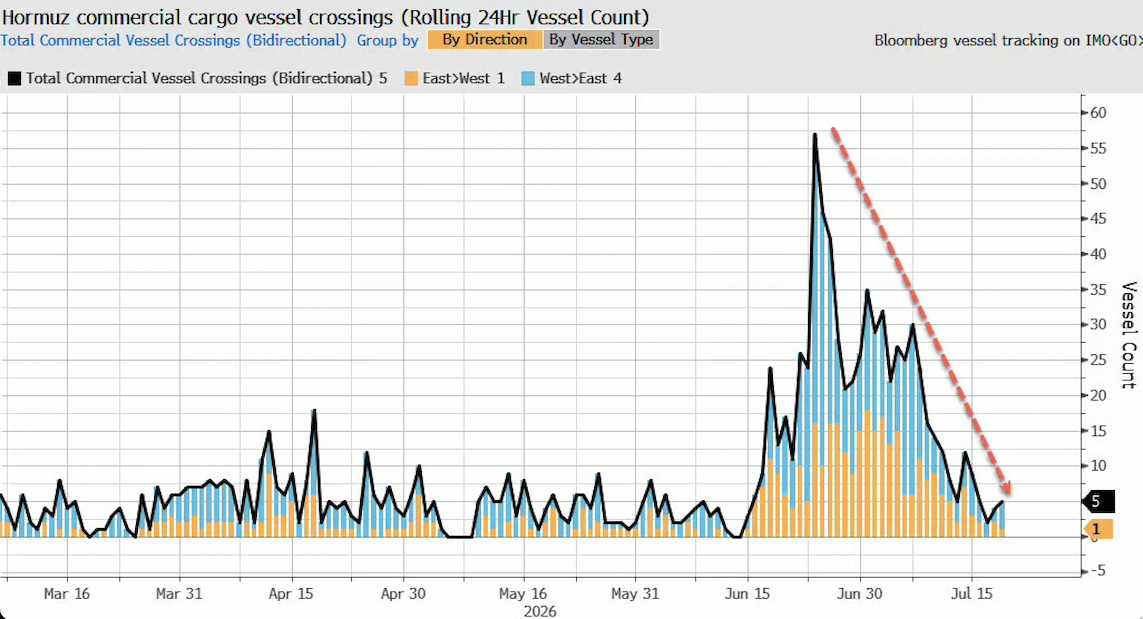
The Iran story is no longer just about whether ships can move through the Strait of Hormuz. The conflict is widening. U.S. strikes have hit Qeshm Island and other targets deeper inside Iran, while Iran has responded with drone and missile attacks on U.S. bases and critical infrastructure across Kuwait, Qatar, and Bahrain. Two U.S. service members were killed in Jordan, Bahrain intercepted aerial attacks, and Kuwait’s power and desalination plants were hit for a second straight day. At this point, the interim ceasefire framework looks effectively dead.
That shift matters because this is starting to look less like a narrow shipping disruption and more like a broader regional infrastructure conflict. Civilian infrastructure is being hit, airports and ports are being evacuated, and even attempts to move vessels through Hormuz are being contested. Iran says vessels using unauthorized routes were stopped or turned back, while regional states are already scrambling for alternatives, including fuel moving by truck through Syria to bypass the Strait.
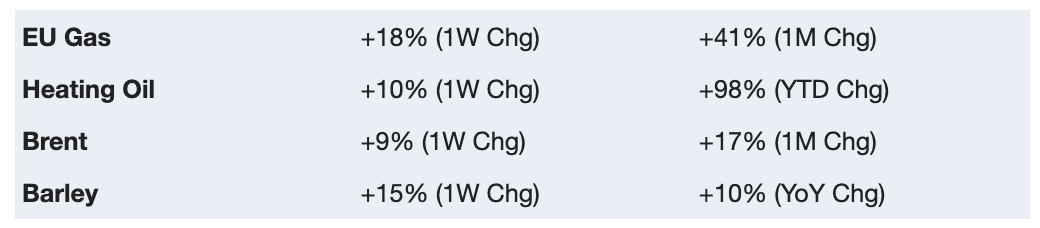
That is why oil is reacting the way it is. Brent jumped toward $88 last week, weekend crude moved higher again, and traders are warning that the buffers which helped cushion the first phase of the conflict have been worn thin. The real risk is not just an oil spike for a day or two. It is that normalization keeps getting pushed further out, forcing markets to price a higher floor for energy for longer than expected.
For investors, the trade ideas remain fairly straightforward. Exxon (XOM), Chevron (CVX), and the Energy Select Sector SPDR (XLE) are still the cleanest ways to express a higher-oil view. If you want a geopolitical hedge rather than a pure energy trade, defense names such as RTX (RTX), L3Harris (LHX), and Northrop Grumman (NOC) still make sense. The key takeaway is that Iran is no longer just a Hormuz headline. It is becoming a wider regional conflict that can keep pressure on oil, inflation, and market leadership.
Last's Weeks Sector Winners & Losers
Sector leadership flipped hard last week as investors moved out of the most crowded AI and growth trades and into more defensive and inflation-sensitive areas. Energy (XLE +4.72%) led by a wide margin, followed by Real Estate (XLRE +2.18%), Consumer Staples (XLP +1.27%), Financials (XLF +0.99%), and Health Care (XLV +0.16%).
The weakest sector by far was Information Technology (XLK -5.48%), followed by Consumer Discretionary (XLY -1.54%), Industrials (XLI -1.38%), Communication Services (XLC -0.89%), Materials (XLB -0.71%), and Utilities (XLU -0.53%).
The week’s performance makes the rotation much clearer. Investors were not selling everything. They were selling the most crowded technology exposure while rotating into energy, defensives, and parts of the broader market that tend to hold up better when oil rises, volatility increases, and confidence in narrow leadership starts to crack.
Upcoming Events This Week
The week ahead will be driven by three themes: Middle East developments, earnings season, and the Fed. Investors will continue monitoring renewed U.S.-Iran hostilities and the risk of further disruption to oil supplies, while earnings season begins with major banks including JPMorgan, Bank of America, Citigroup, Goldman Sachs, and Wells Fargo, followed later in the week by Johnson & Johnson, Morgan Stanley, UnitedHealth, Intuitive Surgical, and Netflix.
On the macro side, Fed Chair Warsh’s congressional testimony will be closely watched for any signals on rates and possible Fed reforms. Key U.S. data releases include June CPI, retail sales, industrial production, Michigan consumer sentiment, and housing data. Overseas, investors will watch the Bank of Canada decision, the U.K.’s May GDP report, and a heavy slate of Chinese data including Q2 GDP, trade, industrial production, retail sales, unemployment, and house prices.

Company News
LevelFields AI Top Stock Alert Last Week
Karman Holdings (KRMN) +7.0% (1D) — Added to the S&P SmallCap 600
Shares of Karman Holdings jumped roughly 7% in one day after S&P Dow Jones Indices announced the company would be added to the S&P SmallCap 600, replacing BrightSpring Health Services. Index additions often create immediate buying pressure as funds and ETFs that track the benchmark are forced to purchase shares, which can drive strong short-term outperformance.
This setup looks especially notable because the added-to-S&P SmallCap 600 scenario has historically performed very well for high P/E, high revenue growth companies, with a 100% win rate and an average one-day gain of +4.2%. Karman’s move well exceeded that average, suggesting investors quickly recognized both the mechanical index demand and the company’s strong growth profile. For investors, the takeaway is simple: index inclusion can act as a powerful short-term catalyst, particularly when it happens in a fast-growing name with limited prior institutional ownership.
Big Banks Just Confirmed Where The Strength Is
The big banks did not deliver a simple “economy is strong” message. The clearest pattern was weaker or in-line net interest income, much stronger fee income, and a big lift from trading and deal activity. Goldman had the cleanest quarter, helped by record equities trading and very strong investment banking. Bank of America also benefited from a big jump in fee income and trading revenue. Wells Fargo beat mainly on fees as well, while JPMorgan’s quarter was strong on the surface but less compelling once investors adjusted for a large one-time gain and higher expense guidance.
The bigger takeaway is that this was more of a Wall Street quarter than a Main Street quarter. Trading, underwriting, and deal flow were strong, helped by a hot capital markets backdrop and major equity issuance, while the more traditional lending story remained less exciting. That matters because it suggests the strongest part of the financial sector right now is still market activity, not a broad reacceleration in basic banking fundamentals. In other words, volatility and issuance are helping profits more than loan growth or net interest income.
For investors, that points to a more selective approach. Goldman Sachs (GS) still looks like the clearest capital-markets winner after its blowout quarter. Bank of America (BAC) also looks interesting if management can improve its second-half outlook. Wells Fargo (WFC) looks solid given lower expectations, but JPMorgan (JPM) may need more than headline beats from here because the bar is already so high. The broader read-through is that banks tied to trading, underwriting, and advisory still look better positioned than banks relying mainly on plain-vanilla lending.
.png)
How to use LevelFields for Options Trading
Tracking Stocks Without Spreadsheets
The Truth About Dividend Stocks
What's LevelFields' Premium Membership Provide?
This is not financial advice. All information represent opinions only for informational purposes. Given the vast number of stocks we cover in these reports, assume staff covering stocks have positions in stocks discussed.
Have feedback or a request for specific data? Drop us a note at support@levelfields.ai